The post Saily eSIM Review: A Comprehensive eSIM for Travelers appeared first on Nomadic Matt's Travel Site.
]]>
When I started backpacking almost 20 years ago, there were no smartphones. That meant you had to rely on paper maps, physical guidebooks, and (often outdated) information from random web forums. While it made traveling adventurous, it also made planning a trip very difficult.
Fortunately, times have changed.
It’s never been easier to access information while you’re abroad. From booking hotels to looking up directions to finding places to eat, access to Wi-Fi and mobile data has changed the game.
SIM cards were the first step in making this evolution possible. You’d buy an overpriced physical SIM card on arrival and hope that you didn’t blow through the data before your trip ended (or you moved on to a new country).
But even those days are past thanks to eSIMs, digital SIM cards you can set up before you even leave home. They are easy to use, affordable, and sometimes even come with awesome perks (more on that below).
One of the most popular eSIMs on the market? Saily.
In this Saily eSIM review, I’ll break down what Saily offers and how much it costs so that you can decide if it’s the best choice for your next trip.
What is Saily?
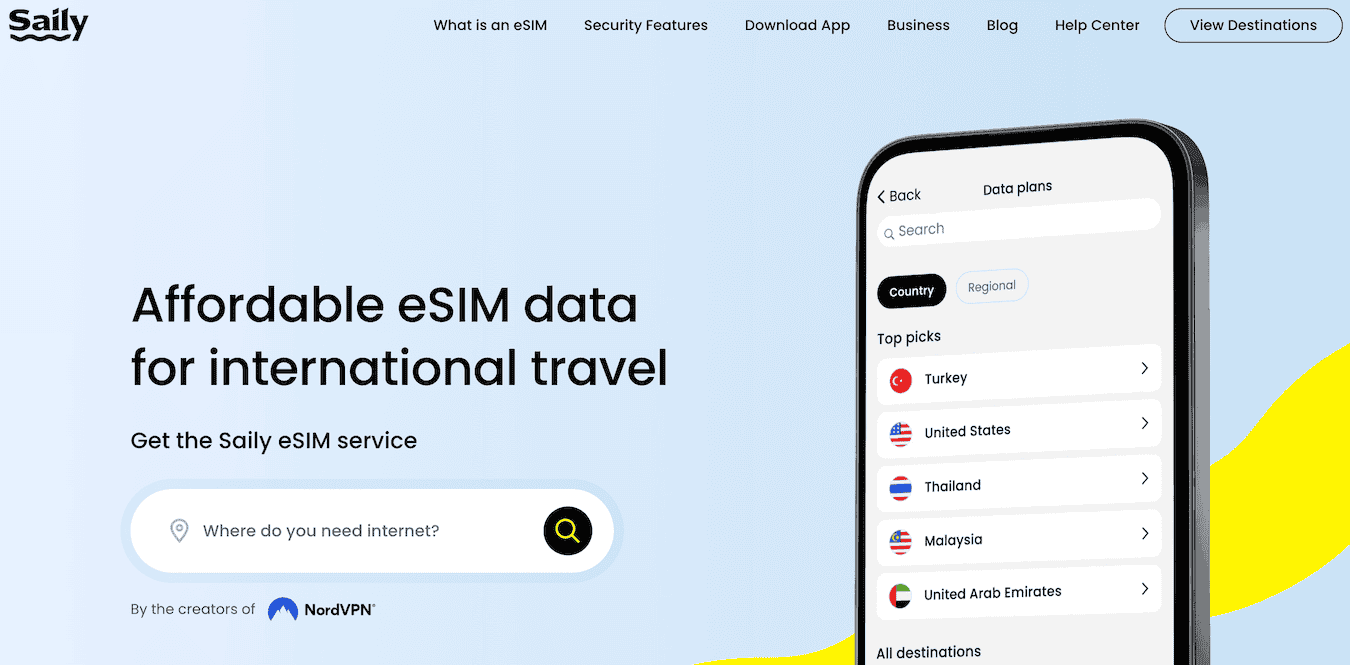
Saily is an eSIM app created by NordVPN. Just like a regular physical SIM card, an eSIM lets you activate and access mobile data while abroad. That means you don’t need to buy a physical SIM card on arrival, you can avoid expensive roaming fees, and you don’t need to use public Wi-Fi (which is often unsafe).
For me, the best part of eSIMs is that you can set them up before you leave. That way, you’ll know exactly how much data you have and can pick out the perfect data plan from the comfort of your home. Saily also has 24/7 chat support, so if you have a question or run into problems you can get the help you need.
And Saily offers plans in over 200 destinations, which means that no matter where you’re heading, they can ensure you stay connected while you’re there.
How to Use a Saily eSIM
While using an eSIM might seem more difficult than just popping in a physical SIM card, it’s actually super easy to get started. Here’s what you need to do:
- Download the app (it’s available on both iOS and Android)
- Create an account and add your payment info
- Select the country you’re going to (or the region)
- Choose your plan
- Follow the prompts provided
That’s it! Now you have an eSIM that activates automatically the moment you land in your destination, saving you the time and energy of having to find one on arrival.
What I especially like, though, is that you just need to install the eSIM once. Going to more countries later in the year? No problem. You just add a new plan for that trip and pay for the new data. No reinstalling for every trip. As I said, it’s super easy!
How Much Does Saily Cost?
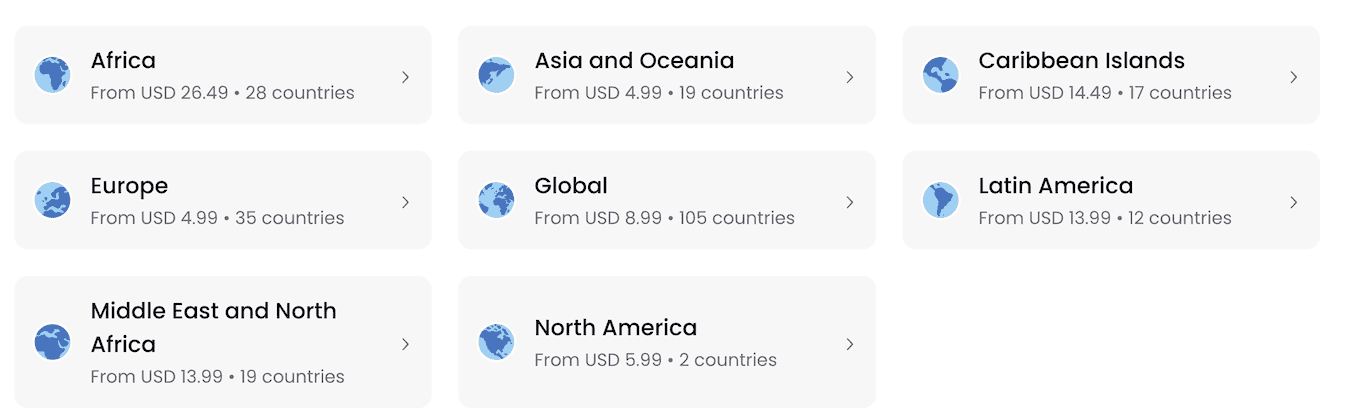
Prices for Saily eSIM plans vary by country, but you can find them for as low as $1.99 USD. For example, if you’re heading to Paris for a week, a 7-day plan with 1GB of data costs $3.99 USD. Staying longer? You can get 30 days of coverage and 20GB of data for just $31.99 USD. Super affordable.
If you’re visiting more than one country, you can also buy a regional plan. These are available for Europe, Africa, Latin America, and more, with prices starting as low as $4.99 USD. They even have a global plan in case you’re going everywhere!
In short, eSIM plans with Saily are very affordable!
Added Security Features of Saily
What makes Saily stand above the competition though is that they are more than just an eSIM company. Their plans include several awesome perks that make using them a no-brainer. Here’s what’s included:
Virtual Location – Saily plans include a virtual location so that you can rest assured your data is secured and private. In the past, I’ve had to buy a separate VPN plan in addition to my eSIMs. Not anymore! Now I can travel knowing my connection is private, secure, and safe from outside access.
Ad blocker – Ads not only make surfing the web a pain, but they chew through your data. With an ad blocker activated, you’ll not only have a better online experience but you’ll save more of your data (which saves you money).
Web protection – When we travel, we often connect to free public Wi-Fi. While convenient, it also opens you up to all kinds of malware (airports are especially bad for this). Having web protection enabled reduces trackers and malicious websites before they reach your device. This ensures your data is safe as you travel.
Pros of Saily
- Competitive rates vs other eSIM companies
- Regional plans available for multi-country trips
- Good data speeds
- 24/7 customer support
- Virtual location
- Ad blocker
- Web protection
Cons of Saily
- Slightly more expensive than buying a local SIM card
- No texting or calls
Saily not only offers a solid product in its eSIM but the added perks make this one of the best eSIM options on the market. It’s affordable, easy to use, and its safety and privacy perks offer incredible extra value. No matter where you’re heading, Saily can ensure you stay connected — without breaking the bank!
Ready to sign up? Use code NOMADICMATT5 to get 5% off!
Book Your Trip: Logistical Tips and Tricks
Book Your Flight
Find a cheap flight by using Skyscanner. It’s my favorite search engine because it searches websites and airlines around the globe so you always know no stone is being left unturned.
Book Your Accommodation
You can book your hostel with Hostelworld. If you want to stay somewhere other than a hostel, use Booking.com as it consistently returns the cheapest rates for guesthouses and hotels.
Don’t Forget Travel Insurance
Travel insurance will protect you against illness, injury, theft, and cancellations. It’s comprehensive protection in case anything goes wrong. I never go on a trip without it as I’ve had to use it many times in the past. My favorite companies that offer the best service and value are:
- SafetyWing (best for budget travelers)
- World Nomads (best for mid-range travelers)
- InsureMyTrip (for those 70 and over)
- Medjet (for additional evacuation coverage)
Want to Travel for Free?
Travel credit cards allow you to earn points that can be redeemed for free flights and accommodation — all without any extra spending. Check out my guide to picking the right card and my current favorites to get started and see the latest best deals.
Need a Rental Car?
Discover Cars is a budget-friendly international car rental website. No matter where you’re headed, they’ll be able to find the best — and cheapest — rental for your trip!
Need Help Finding Activities for Your Trip?
Get Your Guide is a huge online marketplace where you can find cool walking tours, fun excursions, skip-the-line tickets, private guides, and more.
Ready to Book Your Trip?
Check out my resource page for the best companies to use when you travel. I list all the ones I use when I travel. They are the best in class and you can’t go wrong using them on your trip.
The post Saily eSIM Review: A Comprehensive eSIM for Travelers appeared first on Nomadic Matt's Travel Site.
]]>The post SafetyWing Travel Insurance: Which Plan Is Right For You? appeared first on Nomadic Matt's Travel Site.
]]>
Whether you’re traveling to Europe for two weeks or planning an epic round-the-world adventure, you need travel insurance.
Seriously.
I know, it’s not a fun topic to read about. And yes, it will add to your travel budget. But after almost two decades on the road, I’ve learned the hard way just how important travel insurance can be.
I’ve had my luggage lost, I’ve popped an eardrum, and I’ve even been stabbed. Throw in countless delayed and cancelled flights and I’d be out thousands upon thousands of dollars.
Fortunately, I had travel insurance. They were there to help me navigate the problems and ensure I didn’t go broke paying for emergency expenses.
These days, SafetyWing is my go-to travel insurance company. I’ve been using them for years and have found their plans to be super affordable, their customer service fast and friendly, and their coverage to be sufficient for what I need.
Currently, SafetyWing offers two plans for travelers:
- Nomad Insurance Essential
- Nomad Insurance Complete
While both plans are great, they are each designed for specific kinds of travelers. In this post, I’ll break down what each plan covers and who it is for so you can decide which plan is best for your next trip.
The SafetyWing Essential Plan
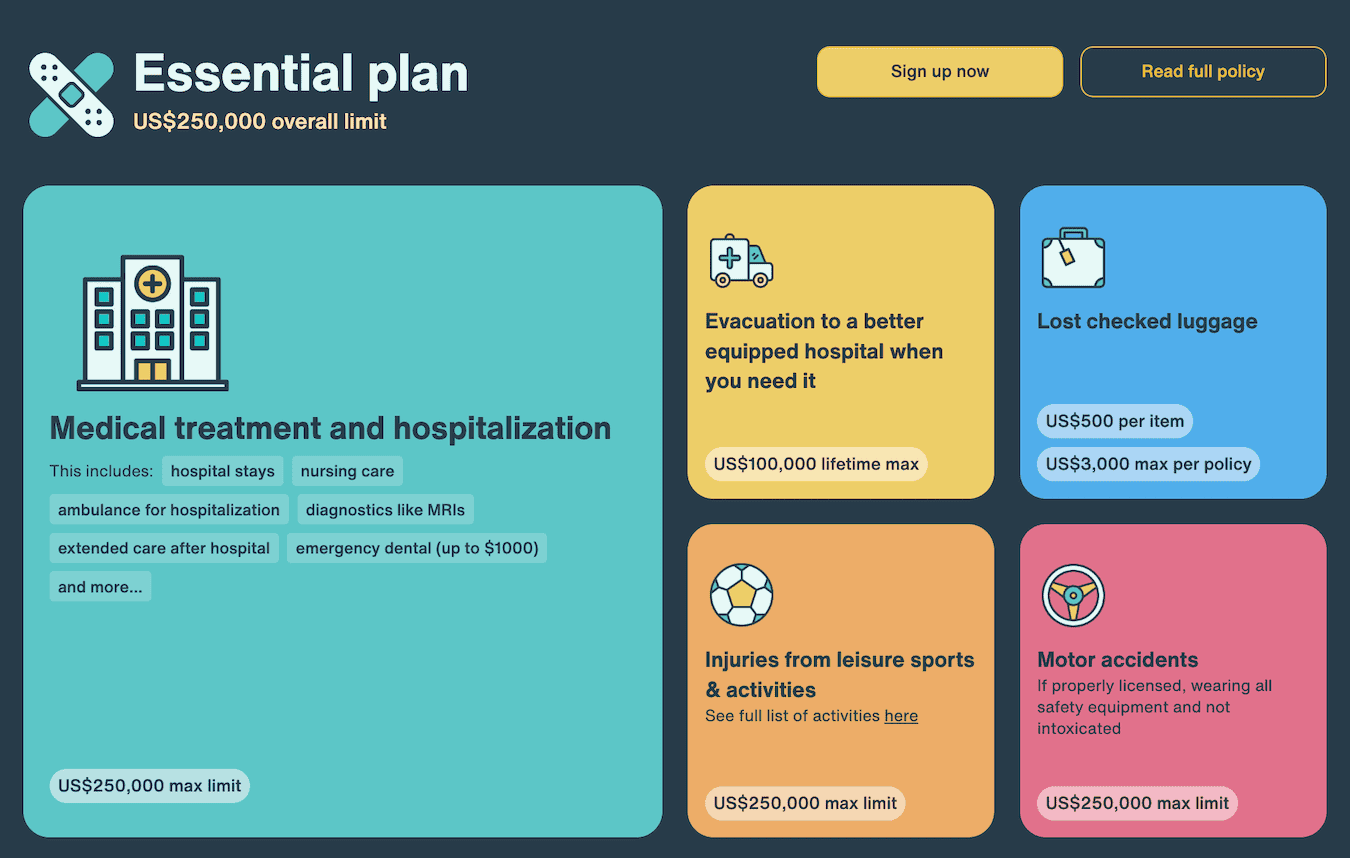
This is the main travel insurance plan from SafetyWing. It’s designed for travelers who want basic coverage without breaking the bank. It’s the plan I use when I travel these days.
The plan costs just $56.28 USD for 4 weeks (for travelers aged 10-39). That’s one of the lowest prices out there for reliable travel insurance. They are super competitive when it comes to price.
For comparison, similar plans from other companies are double that (or more). The plan is suitable for travelers up to age 69, though travelers 60–69 will be paying $196.84.
Here is what the Essential plan covers at a glance:
- $250,000 for emergency medical treatment and hospitalization
- $100,000 for medical evacuation
- $250,000 for motor accidents
- Up to $3,000 for lost luggage ($500 per item)
- $10,000 for evacuation due to political unrest
- $5,000 for trip interruption
- $200 for travel delay ($100 per day for two days)
They also have three helpful add-ons:
- Coverage for adventure sports
- Coverage if you’re visiting the US
- Coverage for electronics theft
Since not everyone needs these, I like that they are available as add-ons. Personally, I always need extra electronics coverage, but I never need coverage for adventure sports since I am pretty much the opposite of an adrenaline junkie. I like that I can customize the plan to suit my travel plans/travel style.
Who is the essential Plan For?
SafetyWing’s primary plan is great for a wide range of travelers. Here are the kinds of travelers that I think the policy is best for:
Backpackers – I think the Essential’s plan is the best travel insurance plan for travelers on a budget. It’s what I use when I travel these days because it balances affordability with coverage. At just a couple bucks per day it won’t break the bank and it has coverage for all the most serious potential emergencies.
Budget & Midrange Travelers – If you’re traveling to Europe for a few weeks or heading to the Caribbean for a relaxing holiday, this plan is for you. It balances cost with emergency coverage, as well as some coverage for things like delays and cancellations.
The SafetyWing Complete Plan
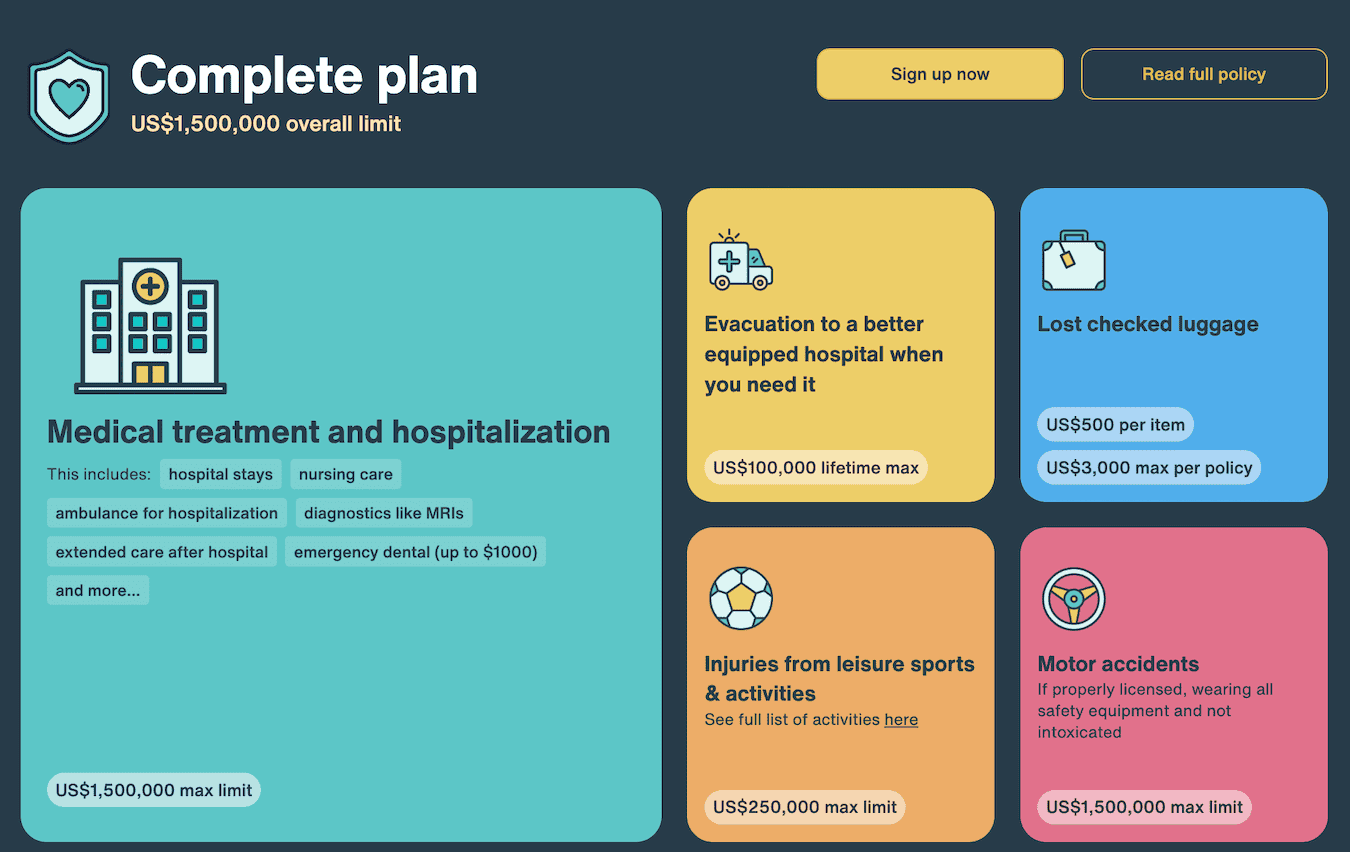
The Complete plan is insurance for digital nomads, remote workers, and long-term travelers. It’s a mix of your standard emergency coverage (similar to the Essential plan above) but it also includes “regular” non-emergency coverage.
So, not only does the plan cover things like emergency injuries and illness but it also includes routine visits and preventive care. It’s a replica of the kind of health insurance you might find in your home country, ensuring that you’re looked after no matter what happens.
The plan costs $150.50 for 4 weeks (for travelers aged 18–39). It’s available to travelers up to age 64.
Here’s a look at what the plan covers for emergencies:
- $1,500,000 in coverage for medical emergencies
- $100,000 for medical evacuation
- $1,500,000 for motor accidents
- Up to $3,000 for lost luggage ($500 per item)
- $10,000 for evacuation due to political unrest
- $5,000 for trip interruption
- 150 per day for travel delay (up to three days), $60 for delays over three hours
- $100,000 for accidental death
Overall, the emergency coverage of this plan is similar to the Essential plan, but expanded and with higher limits.
Here’s a look at the plan’s more “standard healthcare” coverage:
- $5,000 for doctor visits (dermatologist, gynecologist, etc.)
- $300 for routine check-ups
- 10 psychologist or psychiatrist visits per year
- $1,500,000 for cancer treatment
- $2,500 for maternity care
- $5,000 for wellness treatment
- $5,000 for stolen belongings
As you can see, the Complete plan is much more robust than the Essential plan. It’s the plan I wish I had when I first started backpacking full-time because it’s just so comprehensive. If I was working remotely overseas full time, this is the plan I would use.
Additionally, new conditions such as diabetes or asthma are covered under the Complete plan (under Essential, they become pre-existing conditions). That’s something not a lot of other companies offer, which I think is a huge plus.
One important difference between the Complete and Essential plans, however, is that, unlike regular travel insurance, Nomad Insurance Complete applicants must be approved. You can’t just buy a plan and be on your merry way, as the insurance team needs to review your application, along with any medical history and/or pre-existing conditions. They may also request additional medical notes or documents.
While I don’t love that some people are likely to be screened out and you can just buy a plan with a click and be on your way, I understand the reasoning given the cost of health care around the world.
Who is the Complete Plan For?
SafetyWing’s Complete plan is perfect for three kinds of travelers:
Long-Term Travelers – If you’re planning to travel for a year or more, this is the plan for you. It will ensure you have coverage for emergencies, as well as for routine check-ups. And the higher coverage limits for delays and cancellations are a must for those traveling often.
Digital Nomads – If you’re going to be traveling and working, you’re going to want emergency coverage with a high limit. The wellness coverage the Complete plan includes is also a nice touch.
Expats – If you’re living abroad for some (or all) of the year, you’ll want to have access to both emergency coverage as well as regular check-ups. The evacuation coverage is a must too should you be living in more turbulent regions.
I never leave home without travel insurance. For just a few dollars a day, you not only ensure you don’t go bankrupt should an emergency occur, but you’ll also get peace of mind knowing that you have help and support should something happen.
Whether you’re a budget backpacker looking for a basic plan or a seasoned digital nomad who needs robust healthcare, SafetyWing has you covered.
Use the widget below to get a free quote:
Book Your Trip: Logistical Tips and Tricks
Book Your Flight
Find a cheap flight by using Skyscanner. It’s my favorite search engine because it searches websites and airlines around the globe so you always know no stone is being left unturned.
Book Your Accommodation
You can book your hostel with Hostelworld. If you want to stay somewhere other than a hostel, use Booking.com as it consistently returns the cheapest rates for guesthouses and hotels.
Don’t Forget Travel Insurance
Travel insurance will protect you against illness, injury, theft, and cancellations. It’s comprehensive protection in case anything goes wrong. I never go on a trip without it as I’ve had to use it many times in the past. My favorite companies that offer the best service and value are:
- SafetyWing (best for budget travelers)
- World Nomads (best for mid-range travelers)
- InsureMyTrip (for those 70 and over)
- Medjet (for additional evacuation coverage)
Want to Travel for Free?
Travel credit cards allow you to earn points that can be redeemed for free flights and accommodation — all without any extra spending. Check out my guide to picking the right card and my current favorites to get started and see the latest best deals.
Need a Rental Car?
Discover Cars is a budget-friendly international car rental website. No matter where you’re headed, they’ll be able to find the best — and cheapest — rental for your trip!
Need Help Finding Activities for Your Trip?
Get Your Guide is a huge online marketplace where you can find cool walking tours, fun excursions, skip-the-line tickets, private guides, and more.
Ready to Book Your Trip?
Check out my resource page for the best companies to use when you travel. I list all the ones I use when I travel. They are the best in class and you can’t go wrong using them on your trip.
The post SafetyWing Travel Insurance: Which Plan Is Right For You? appeared first on Nomadic Matt's Travel Site.
]]>The post World Nomads Annual Travel Insurance Review appeared first on Nomadic Matt's Travel Site.
]]>
If you’re a frequent traveler, you know that planning multiple trips throughout the year can be a logistical challenge. There are lots of moving parts to organize, from flights to accommodation to activities. And it gets even more challenging if you’re traveling with friends or family.
In fact, there’s so much to keep track of that most people neglect one of the most important things you can take on any trip: travel insurance.
A lot of travelers avoid even thinking about travel insurance. Comparing prices and plans seems like a hassle (and an unnecessary expense to boot). After all, you probably won’t need it, and then you’ve just paid for nothing.
But you haven’t paid for “nothing.” You’ve paid for assurance that you have a plan in place should the unexpected or unfortunate happen while you’re abroad. And if something does happen, you will be very glad that you have coverage. Accidents and mishaps that happen on the road can add up quickly, leaving you hundreds (if not thousands) out of pocket.
After over 15 years of traveling the world, travel insurance is the one thing I never leave home without. It’s that important!
And while finding and comparing plans used to be time-consuming (I’ve read a lot of fine print over the years), it’s never been easier to learn about new plans. Gone are the days of having to buy a new plan for each and every trip too, thanks to the growing number of annual multi trip plans.
World Nomads, a company I’ve been recommending for over a decade, has just launched its own Annual Travel Protection Plan for US residents. Here’s everything you need to know to decide if it’s the best plan for your next journey:
What is World Nomads?
World Nomads is a travel insurance* company that started out geared towards backpackers and adventure travelers, with an extensive list of more than 250 adventure sports and activities covered. It’s the one I used on my first big trip around the world (and have used it dozens of times since).
They’ve been around for over twenty years and provide coverage for people from more than a hundred countries. Through World Nomads, you can get international and domestic coverage when traveling at least 100 miles from home for:
- Emergency medical and dental work
- Sudden illness and injury
- Medical evacuation and repatriation
- 24-hour emergency medical assistance
- Lost, stolen or damaged baggage
- Cancellations and interruptions
- Trip and baggage delay
- Over 250 types of adventure activities
- And more!
Overall, World Nomads is a solid travel insurance company for travelers who want bundled coverage. While there are cheaper plans out there, World Nomads offers multiple plans to choose from and varying levels of coverage (especially when it comes to cancellations and adventure activities).
If you’re going to be doing a lot of outdoor activities and want a variety of covered activities available, World Nomads is the company I recommend.
That said, since I’ve already covered World Nomads in depth in this review, today I’m going to focus on their new Annual Plan. It’s something that many travelers have asked me about, both in my inbox and on our travel insurance webinars. I’m glad to see they’ve created an Annual Plan to fill this need.
What is the World Nomads Annual Travel Protection Plan?
Previously, World Nomads only offered single-trip protection plans. You bought a plan for a predefined period and destination, and that was it.
But what if you travel a lot throughout the year? It’s a hassle to have to buy a new plan every time. Those single-trip plans add up too.
With World Nomads annual plans, however, you pay once and get travel protection for multiple countries, and for an unlimited number of trips up to 45-days long through the entire year. This not only simplifies your planning but could save you money in the long run.
There are four caveats though.
First, each trip under the annual plan is capped at 45 days. Most travelers don’t travel abroad for that long, though, so I don’t really consider that a negative.
Second, annual plans do not auto-renew, so you’ll need to purchase a new plan each year. That said, World Nomads sends a reminder a month before your current plan expires, so this isn’t really a big deal either.
Third, the US Annual Plan is only available to be purchased independently per traveler. The plan is not available for family or couple purchases like the single trip plans; however, you can purchase individual Annual Plans for each member of your family under the age of 69.
Fourth, and most important, the Annual Plan is currently only available to US residents (except residents of Missouri, Montana, New York or Washington). World Nomads also offers a similar Annual Multi Trip plans for UK and Ireland residents, but coverages vary compared to the US plan. Hopefully, if it’s successful, they will expand it to more countries in the future.
What does World Nomads’ Annual Travel Protection Plan cover?
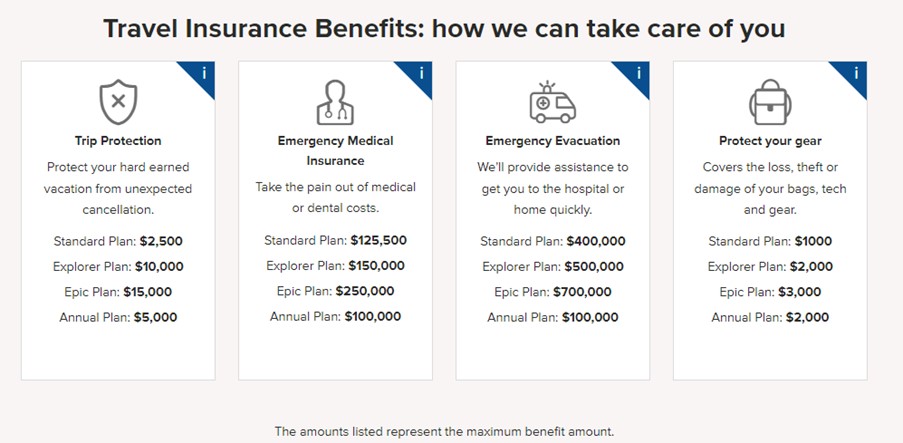
The coverage under a World Nomads Annual Plan is similar to that of its single-trip plans. As a plan holder, you’ll get coverage for more than 250 adventure activities, trip cancellation, emergency medical expenses, and some for lost and stolen gear.
Here’s exactly what’s covered found on the World Nomads website:
The plans also cover incidents that occur while you’re participating in any of 250+ adventure activities in the following categories:
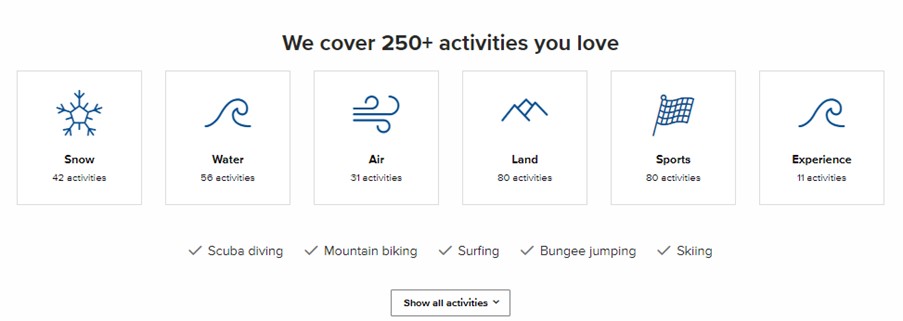
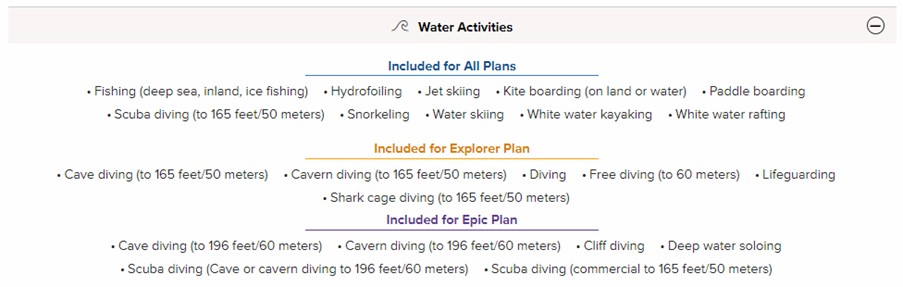
Most activities are included in the Annual Plan. More extensive activities could be covered on the single trip Explorer and Epic Plans. To give you an example, zip-lining and snorkeling are covered by Standard and Annual plans, while heli-skiing is covered by the Explorer plan and free soloing is only covered by the Epic Plan.
Here are all the water-related activities that World Nomads covers:
Of course, there are also things World Nomads does not cover. These include (but aren’t limited to):
- Engaging in any illegal activities
- Incidents that occur when under the influence of alcohol or other drugs
- Non-emergency medical treatment that can wait until you return home
In short, World Nomads offers travel insurance, not health insurance. It’s there for when the unexpected happens, not for ongoing treatment or checkups.
Additional Perks for all USA Travel Protection Plans
In addition to rolling out the new annual plan, World Nomads is expanding the non-insurance services included within all USA travel protection plans.
- 24/7 Emergency Assistance supports you in emergency situations, 24 hours a day, 7 days a week. The support team can get you to the nearest hospital or consulate, offer translation services and provide guidance in emergency situations.
- FootPrint ID allows to you to keep track of your medical records and emergency contacts in one place. This is helpful in emergency situations when healthcare providers need quick answers regarding your medical history, prescriptions and contacts.
- Blue Ribbon Bags offers delayed and lost luggage retrieval services. They can track and expedite the return of delayed airline baggage for outbound flights and are available to assist 24/7.
- Runway Health provides free pre-trip online health consultations so travelers can get access to prescriptions and vaccinations for common travel needs like altitude sickness and malaria before taking off for their trip.
Pros of World Nomads’ Annual Travel Protection Plan
- Covers you for an unlimited number of trips within a year
- Cost-effective and convenient (you don’t have to buy a new plan for each trip)
- Coverage for over 250 activities
- Coverage for domestic and international travel
- Access to 24/7 Emergency Assistance, FootPrint ID, Runway Health and Blue Ribbon Bags
- Online claims processing
Cons of Annual Multi-Trip Travel Insurance
- Per trip duration limit of 45 days
- Higher up-front cost than purchasing plans individually
- Only available for individual purchase, no family or couple plans
- Only available for USA, UK & Irish residents at this time
Comparing Annual and Single-Trip Plans
The cost-effectiveness of annual versus single-trip insurance depends on your habits. If you take multiple trips each year, both domestically and internationally, 12-month travel insurance could save you money.
Let’s say that within a year, you plan to travel to Thailand for three weeks, Paris for a long weekend, Mexico for one month, the Bahamas for 10 days, Iceland for a long weekend, and then Spain for a week. If you got annual travel insurance, the quote for a 40-year-old person from the US would be $506 USD. Not bad at all for an entire year’s worth of coverage (that’s just over $42 USD per month)!
If you were to get separate policies for each trip, it would total around $635 USD. Not to mention the added convenience of only having to buy the plan once and get coverage for the entire year. Plus, you’d still be able to go on more trips (or extend your trips) with the annual plan without spending more money!
While prices vary depending on factors such as where you’re going, the length of the trip, and your planned activities, most of the time, it’s a no-brainer to get the annual plan. It’s just so easy and hassle-free.
Both annual and single-trip plans offer the same benefits too. That includes trip cancellation, emergency medical expenses, and personal baggage coverage.
Remember, limits and exclusions may vary. No matter what plan you get, it’s essential to review the plan details carefully.
Who is World Nomads Annual Plan for?
World Nomads annual plan is best for frequent travelers who take several trips throughout the year. You can sign up for a plan once a year, and then go about your travels without thinking about it again. Simply purchase a new plan when the time comes (you’ll get an email reminder).
Personally, I think a lot of travelers who do lots of short weekend trips will find this plan super helpful, as you won’t have to purchase a plan every single time you want to get away. The saved time and money alone make the annual plan worth it, in my opinion.
That said, annual plan is not ideal for full-time digital nomads, since each trip is capped at 45 days. Additionally, World Nomads only covers unexpected emergencies, so if you’re a digital nomad looking for ongoing health insurance (i.e., for non-emergencies), you’ll want to look elsewhere.
Having used World Nomads for over 15 years, I think these new additions are a game changer. While they are only available in the US, UK and Ireland currently, I’m super excited to see what direction the company is moving in. Baggage retrieval service, pre-trip online health consultations — these are awesome perks that I know every traveler is going to appreciate.
Don’t let the hassle of arranging travel insurance for each trip hold you back from exploring the world. Get a quote for World Nomads’ Annual travel insurance plan today and enjoy coverage all year round. Safe travels!
*Travel insurance is included as part of the World Nomads travel protection plan which contains both insurance benefits and non-insurance assistance services. U.S. travel protection plan are serviced by their partner Trip Mate, a Generali Global Assistance & Insurance Services brand, who administers both customer service and claims for U.S. customers.
Book Your Trip: Logistical Tips and Tricks
Book Your Flight
Use Skyscanner to find a cheap flight. They are my favorite search engine because they search websites and airlines around the globe so you always know no stone is left unturned!
Book Your Accommodation
You can book your hostel with Hostelworld as they have the biggest inventory and best deals. If you want to stay somewhere other than a hostel, use Booking.com as they consistently return the cheapest rates for guesthouses and cheap hotels.
Want to Travel for Free?
Travel credit cards allow you to earn points that can be redeemed for free flights and accommodation — all without any extra spending. Check out my guide to picking the right card and my current favorites to get started and see the latest best deals.
Need Help Finding Activities for Your Trip?
Get Your Guide is a huge online marketplace where you can find cool walking tours, fun excursions, skip-the-line tickets, private guides, and more.
Ready to Book Your Trip?
Check out my resource page for the best companies to use when you travel. I list all the ones I use when I travel. They are the best in class and you can’t go wrong using them on your trip.
The post World Nomads Annual Travel Insurance Review appeared first on Nomadic Matt's Travel Site.
]]>The post Travel Insurance for Seniors: Frequently Asked Questions appeared first on Nomadic Matt's Travel Site.
]]>
When I was a young backpacker, I didn’t think much about travel insurance. I browsed a couple plans, bought one, and went on my way. I mean, I probably I wasn’t even going to even need it, right?
Wrong.
While most of my travels over the past seventeen years have gone smoothly, I’ve definitely had plenty of mishaps too, from missed flights to broken gear to serious medical emergencies.
That’s why, these days, I never leave home without travel insurance. Not only does it offer peace of mind (to both me and my loved ones), but it ensures I’m made whole should something unexpected happen.
Understandbly, I get a lot of questions about travel insurance. It’s a complex topic (and, if we’re being honest, a boring one that most people don’t want to research).
Where things get especially complicated is when older travelers try to find a plan. Every week, I get emails from travelers in their 60s, 70s, and beyond asking for input on their policy options. This isn’t just because insurance is complicated (though it is). It’s because prices often skyrocket once you hit 65, and a lot of insurance companies don’t even cover travelers over the age of 70!
So, to help you plan your golden years of travel, here are a few of the most common questions I get about travel insurance for older travelers:
1. What Does Travel Insurance For Older Travelers Cover?
While every policy is different, a good plan will include the following:
- Medical coverage for at least $100,000 USD ($250,000 USD would be better though)
- Emergency evacuation coverage (at least $250,000 USD)
- Coverage for lost, damaged, or stolen possessions, like jewelry, baggage, documents, etc.
- Some coverage for your electronics
- Coverage for cancelations for hotels, flights, and other transportation bookings if you have a sudden illness, death in the family, or other emergency
- Coverage for political emergencies or natural disasters that may cause you to head home early
- Financial protection if any company you are using goes bankrupt
- 24/7 customer assistance
In short, you want a policy that covers medical emergencies, your possessions and purchases, and provides 24/7 support.
The most bare-bones plans generally cover medical emergencies, but not your bookings or possessions. If you’re a super frugal young traveler in your twenties, that might be fine.
Personally, now that I’m older and travel with more valuables (and sometimes book nicer accommodations), I like to have coverage for my possessions and bookings too. Better safe than sorry, if you ask me!
2. What is the Age Limit for Travel Insurance for Older Travelers??
Unfortunately, travel insurance companies usually have age caps on their policies: 65–69 for most, though some offer insurance for those 70–75.
For example, SafetyWing, my personal go-to travel insurance company, caps its plans at age 69. World Nomads, another popular company I’ve used for decades, has an age cap of 70.
As a result, prices skyrocket once you hit 65. Since older travelers often have more health issues than younger ones, and since travel insurance is a for-profit industry, policy costs are higher for older travelers. It’s not fair, I know, especially since a lot of older travelers are perfectly healthy. But that’s just something to keep in mind when comparing plans.
3. How Much is Travel Insurance for Older Travelers?
Prices vary based on your age, destination, and where you live, so there’s no “one price fits all” answer. However, travelers in their sixties and above should be prepared to spend at least $125 USD per month for a very basic plan.
If you want more comprehensive medical coverage, as well as “cancel for any reason” coverage, prices can jump to over $400 USD per month.
4. I Want to Go on a Cruise. What Travel Insurance Company is Best?
If cruises are your primary travel style, these three companies are worth checking out:
Travel Guard – Travel Guard has specific cruise insurance policies, which makes it simpler than trying to find an add-on to another non-cruise-centric policy. It covers any emergency travel assistance, trip interruption, delay, and cancelation.
VisitorsCoverage – VisitorsCoverage is an insurance marketplace with a specific cruise section that compares different plans, including the popular SafeCruise plan by IMG. This plan is designed for cruise travelers and includes everything you might need, including the add-on for “cancel for any reason” coverage.
InsureMyTrip – InsureMyTrip is another insurance marketplace with a cruise-specific section. You can put in your dates, destination, and the cost of your trip, and it’ll pull up a variety of plans with pricing and coverage listed in an easy comparison format.
5. The Two Best Companies for Older Travelers
Since older travelers have different needs when it comes to travel insurance, it’s important that you find a company that covers those needs. Here are what I think are the best travel insurance companies for older travelers:
InsureMyTrip
InsureMyTrip is an insurance aggregator that allows you to compare policies from over twenty companies. This is the best place for older travelers to shop around to get a quote. You’ll be able to search for policies that cover those your age, as well as offer “cancel for any reason” plans (an important perk for any older travelers with health concerns or who are booking expensive trips and don’t want to risk losing that money).
Additionally, IMT also offers policies that cover certain preexisting conditions (which is a huge plus and something most other companies don’t include).
Here’s a quick overview of IMT:
- Comparisons of plans from over 20 companies
- Guaranteed low prices
- Coverage for travelers over 65
- “Anytime advocates” ask the insurer to give your claim a second look if you think it was unfairly denied
Medjet
Medjet isn’t an insurance company but rather a membership program that offers comprehensive emergency medical transportation. As a member, you get 24/7 access to hundreds of air ambulances and expert medical transport escorts and staff, located all over the world.
Why do I think this is a must-have for older travelers?
First, while most insurance companies make sure you get to the “nearest acceptable facility” after an injury, Medjet ensures you get home. That means you won’t have to spend time in a foreign medical facility and can get back to your primary care physician right away.
Second, most travel insurance companies will only evacuate you should there be turmoil or a natural disaster if the government says things are unsafe. If the government doesn’t declare an emergency, travel insurance doesn’t have to evacuate you, forcing you to pay out of pocket if you don’t feel safe.
That’s not the case with Medjet. If you feel you need to be evacuated, they’ll make sure you get home safely.
Finally, it has a high age cap (with coverage up to age 84), which is rare in the travel insurance industry.
Here’s a quick overview of Medjet:
- Extensive medical transport coverage
- Offers regular coverage up to age 74 (with extended coverage up to age 84)
- Coverage for COVID-19
- Limited time spent in foreign medical facilities
- Both short-term and annual plans
- Available to residents of the US, Canada, and Mexico
I never leave home without travel insurance. It’s a lesson I’ve learned the hard way, and one I’m more adamant about as I get older. I think everyone should buy travel insurance before they travel — regardless of age. However, older travelers in particular should make sure they have the coverage they need in case something goes awry. While the policy options are more expensive (and sometimes less robust), there are still plenty of affordable plans to ensure you are protected as you enjoy your golden years of travel.
Book Your Trip: Logistical Tips and Tricks
Book Your Flight
Find a cheap flight by using Skyscanner. It’s my favorite search engine because it searches websites and airlines around the globe so you always know no stone is being left unturned.
Book Your Accommodation
You can book your hostel with Hostelworld. If you want to stay somewhere other than a hostel, use Booking.com as it consistently returns the cheapest rates for guesthouses and hotels.
Don’t Forget Travel Insurance
Travel insurance will protect you against illness, injury, theft, and cancellations. It’s comprehensive protection in case anything goes wrong. I never go on a trip without it as I’ve had to use it many times in the past. My favorite companies that offer the best service and value are:
- SafetyWing (best for budget travelers)
- World Nomads (best for mid-range travelers)
- InsureMyTrip (for those 70 and over)
- Medjet (for additional evacuation coverage)
Want to Travel for Free?
Travel credit cards allow you to earn points that can be redeemed for free flights and accommodation — all without any extra spending. Check out my guide to picking the right card and my current favorites to get started and see the latest best deals.
Need a Rental Car?
Discover Cars is a budget-friendly international car rental website. No matter where you’re headed, they’ll be able to find the best — and cheapest — rental for your trip!
Need Help Finding Activities for Your Trip?
Get Your Guide is a huge online marketplace where you can find cool walking tours, fun excursions, skip-the-line tickets, private guides, and more.
Ready to Book Your Trip?
Check out my resource page for the best companies to use when you travel. I list all the ones I use when I travel. They are the best in class and you can’t go wrong using them on your trip.
The post Travel Insurance for Seniors: Frequently Asked Questions appeared first on Nomadic Matt's Travel Site.
]]>The post Surfshark Review: The Best VPN for Travelers? appeared first on Nomadic Matt's Travel Site.
]]>
When I first started traveling the world, I didn’t have a laptop. I didn’t have a smartphone either. Nobody did. Back then, when you needed to use a computer, you went to an internet café, sent a few emails, and then went back to traveling.
Obviously, things have changed since that first big trip of mine.
These days, every traveler has a smartphone, laptop, or tablet (sometimes all three!). They can be super helpful for staying in touch with friends and family and making bookings for your trip as you go.
Personally, I always travel with a smartphone and laptop. I couldn’t run my blog without them. They also help me be a flexible traveler. I constantly change my plans while traveling, whether that’s to spontaneously meet up with friends, check out a new place I just found out about, or linger somewhere I particularly like. Having a phone or laptop ensures I can easily book as I go and make changes to my itinerary.
While these devices have drastically changed how we travel (and the travel industry as a whole, but that’s a topic for another day), they have some drawbacks that most travelers don’t think about.
The most notable? Safety.
Constantly connecting to unprotected Wi-Fi around the globe can leave your devices open to attack. And since we all use our phones to make purchases and do our banking, that means that our personal data is susceptible to attack.
Fortunately, there’s a super easy (and affordable) way to ensure that your devices and data are protected when you travel: A VPN.
What Is A VPN?
A VPN (Virtual Private Network) provides privacy and anonymity by creating a private network from a public internet connection. In short, they hide your online actions by encrypting your data and masking your IP address. This makes them virtually untraceable and prevents would-be thieves from accessing your private information.
While you might be traveling in Germany, your VPN can cloak your footprint so that it seems like you’re in the U.S., Thailand, or any other destination. This obscures your actions and makes it harder for would-be thieves to access your data.
One of the best and most popular VPNs is Surfshark.
What Is Surfshark?
Surfshark is one of the biggest and best VPN companies out there. Based in the Netherlands and launched in 2018, it’s a cybersecurity company that helps people stay in control of their digital lives. Using Surfshark helps you both manage and understand cybersecurity and cyber threats.
In addition to its VPN, which has over 3,200 servers across 100 countries, Surfshark also offers a suite of other security-related products perfect for travelers:
- Surfshark Antivirus – Keeps your devices free from viruses and malware.
- Surfshark Alert – Alerts you if your email address appears in breached online databases, monitors your credit cards, and checks password vulnerability.
- Surfshark Search – Allows you to search the web without leaving a digital footprint.
- Alternative ID – Generates a brand-new identity and an email to use online to keep your real ID hidden. Can also include a virtual phone number to help you avoid spam calls and increase your safety.
While some of these features might not feel necessary for you, I think every traveler should be using a VPN and antivirus software at the very least. Considering how much time we spend online, and how much sensitive data we share online, those two (at least for me) are no-brainers.
In 2022, 5.5 million malware attacks were detected across the world, and that number is only increasing. In the U.S. alone, the FBI recorded almost 1 million cybercrime complaints in 2023, up 10% from last year.
Plus, with the rise of AI, there are more and more concerns that it will be used to write malware. AI is already being used to write more convincing phishing emails. So, I expect that we may see even more viruses and internet security breaches in the future.
That means you need to be prepared.
Why Use a VPN?
Obviously, the main reason to use a VPN is security. A recent study showed that over 40% of respondents had their online security compromised when using public Wi-Fi (interestingly, the most common place it happened was the airport). With a VPN, you can safely and confidently use your devices abroad, both on mobile data and public Wi-Fi. But there are a couple of other reasons travelers might want to use a VPN: accessing geo-restricted websites and getting better prices.
Let’s talk about getting better prices first.
When booking online, prices for things like flights and hotel rooms can vary by country due to the exchange rate. For example, a hotel in the UK might cost $200 USD per night when booking from the hotel site’s U.S. website. That’s roughly 156 GBP.
However, if you book via the UK website, that hotel might only cost 146 GBP per night — 10 GBP cheaper. Sure, that’s not a ton, but saving a few bucks every time you book can add up, especially if you travel often or are booking a long trip.
Using a VPN to Save Money & Bypass Streaming
Once you install your VPN and are ready to book, you should always connect to the IP address of the destination you’re booking the hotel in. For example, if you’re booking a hotel in Thailand, you’ll have a higher chance of getting the lowest rate by connecting to Thailand’s IP address. A VPN can help you do that. (It’s as easy as hitting a button to choose what country you want to connect to.)
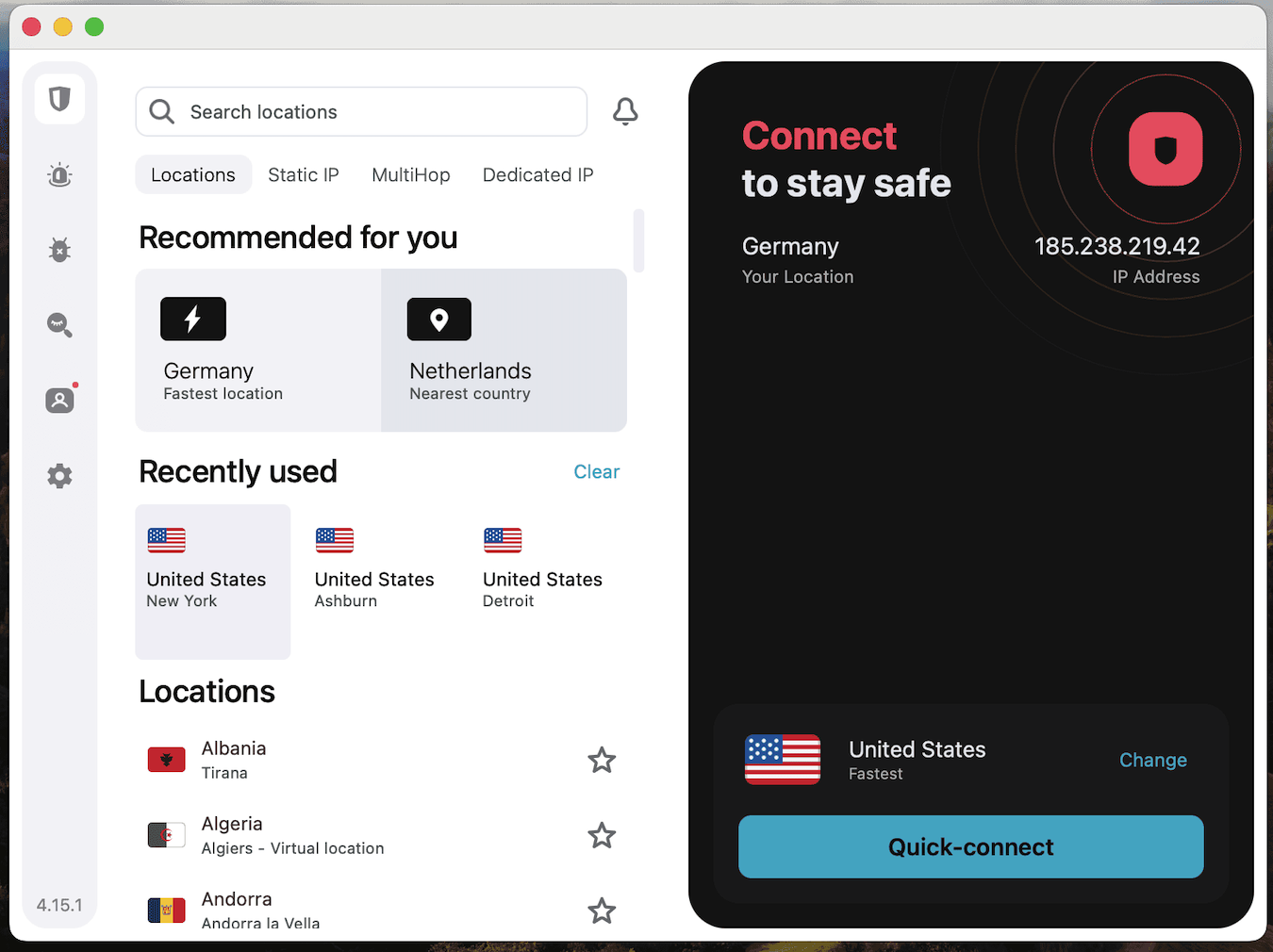
Here’s an example of me connecting to a U.S. IP address while I’m in Germany:
That said, always “shop around” using different VPN locations (chiefly ones from the EU and the UK) as those usually result in better deals when compared to the U.S.
Additionally, VPNs allow you to access geo-restricted content. Streaming services like Netflix, Hulu, and BBC iPlayer have different libraries based on location. With a VPN, you can connect to servers in different countries, bypassing these restrictions and accessing a broader range of content. This is useful for expats and travelers who want to access content from their home country while abroad. Even when on the road, sometimes you just need a taste of home by catching up on your favorite show. A VPN can let you do that.
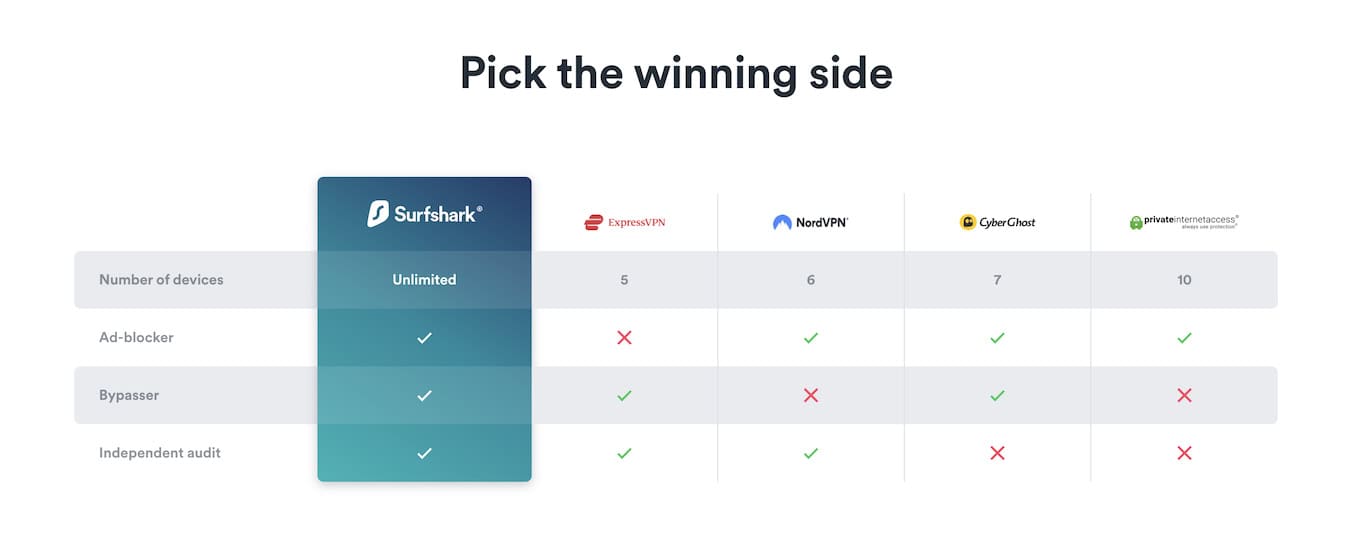
Pros and Cons of Surfshark
Surfshark is one of the biggest and best VPN companies out there, offering a host of perks as well as three different tiers for pricing, based on your needs.
Here’s a quick look at what I like about them, as well as where they have room for improvement:
PROS
- Keeps your digital freedom while traveling to internet-restricted countries
- Provides quick and secure access to blocked or censored material
- Private & safe access to local content everywhere in the world
- Watch sports online securely with no buffering or annoying pop-ups
- Allows usage on an unlimited number of devices
- Stop ads from loading to save data and boost speeds
- Auto-connection option so you don’t have to remember to enable it
- 24/7 live chat and support
- Independently verified no-logs policy (meaning they don’t record your data)
CONS
- It’s a paid service
- Prices increase dramatically after a 24-month introductory period
Who Is Surfshark For?
If you’re connecting to the internet in a public place, Surfshark is for you. Whether you’re working remotely from a café or booking your next hostel while on the road, that’s everyone at some point. While VPNs used to be used mainly by corporations, now over 30% of Internet users worldwide use a VPN, and that number is only growing. The rise of remote work along with the rise of cyber threats means that cybersecurity is more important than ever.
In short, I think every traveler should be using a VPN and antivirus software. It’s the bare minimum you need in terms of security.
VPN Frequently Asked Questions
Are VPNs legal?
Yes, VPNs are legal in most countries. However, some countries restrict or ban their use. It’s important to check the local laws for the country you’re traveling in. For example, they are banned in North Korea and Belarus, and only certain government-approved VPNs can be used in India, China, and Russia (which kind of defeats their purpose to be honest).
Fortunately, however, in the majority of places you visit, you’ll be allowed to use your VPN freely.
Do VPNs slow down your internet connection?
VPNs can sometimes slow down your internet connection due to the encryption process and the distance to the VPN server. However, Surfshark is optimized to minimize speed loss. I haven’t see any noticeable difference using it. (Keep in mind that speeds may vary depending on your location and usage.)
Is using a free VPN safe?
While free VPNs do exist, they come with limitations, such as data caps, slower speeds, and fewer server options. Some may also log your data and sell it to third parties.
If you want to use a free VPN just to test it out briefly, that’s fine. But for long-term use or while traveling, it’s always best to use a reputable paid VPN service for better security and privacy.
I always use a VPN when I travel. I think every traveler should do the same. While it may not have been necessary in the past, we do so much online these days that it’s foolish to leave your data unprotected.
When it comes to VPNs and online safety, I think Surfshark has a great suite of products that caters to travelers of all stripes, from the casual holidayer to the digital nomad. They offer a ton of perks, have great customer service, and are super affordable. Prices do jump after around two years, which I don’t love, but it still won’t break the bank.
Don’t skimp on your safety. Use a VPN like Surfshark the next time you travel. Because it’s always better to be safe than sorry.
Click here to sign up for as little as $2.19 USD per month!
Book Your Trip: Logistical Tips and Tricks
Book Your Flight
Find a cheap flight by using Skyscanner. It’s my favorite search engine because it searches websites and airlines around the globe so you always know no stone is being left unturned.
Book Your Accommodation
You can book your hostel with Hostelworld. If you want to stay somewhere other than a hostel, use Booking.com as it consistently returns the cheapest rates for guesthouses and hotels.
Don’t Forget Travel Insurance
Travel insurance will protect you against illness, injury, theft, and cancellations. It’s comprehensive protection in case anything goes wrong. I never go on a trip without it as I’ve had to use it many times in the past. My favorite companies that offer the best service and value are:
- SafetyWing (best for budget travelers)
- World Nomads (best for mid-range travelers)
- InsureMyTrip (for those 70 and over)
- Medjet (for additional evacuation coverage)
Want to Travel for Free?
Travel credit cards allow you to earn points that can be redeemed for free flights and accommodation — all without any extra spending. Check out my guide to picking the right card and my current favorites to get started and see the latest best deals.
Need a Rental Car?
Discover Cars is a budget-friendly international car rental website. No matter where you’re headed, they’ll be able to find the best — and cheapest — rental for your trip!
Need Help Finding Activities for Your Trip?
Get Your Guide is a huge online marketplace where you can find cool walking tours, fun excursions, skip-the-line tickets, private guides, and more.
Ready to Book Your Trip?
Check out my resource page for the best companies to use when you travel. I list all the ones I use when I travel. They are the best in class and you can’t go wrong using them on your trip.
The post Surfshark Review: The Best VPN for Travelers? appeared first on Nomadic Matt's Travel Site.
]]>The post Freely Travel Insurance Review appeared first on Nomadic Matt's Travel Site.
]]>
Posted 5/28/24 | May 28th, 2024
I never leave home without travel insurance. After over 15 years on the road, I’ve learned firsthand how important it is. Not only has it helped me deal with lost luggage, canceled flights, and medical emergencies, but it’s helped countless friends and readers of my blog too.
However, travel insurance is a boring topic to read about. Nobody likes comparing plans and reading policies. Myself included. It’s the least exciting part of trip planning.
Fortunately, it’s never been easier to find a plan and policy that suits your needs and budget. More and more companies are making it fast and simple to get a quote, sign up for a plan, read the fine print, and make a claim.
One of those companies is Freely.
What is Freely?
Freely is a travel insurance company and safety app. Like many insurance companies, it provides coverage so you can be made whole should something happen (for a covered reason) while you’re on the road. Its base plan includes all the essentials I look for in an insurance policy, including emergency medical care, emergency evacuation coverage, trip interruption, lost baggage, and 24/7 support.
But Freely does a few things differently too.
Freely keeps its base policy affordable by not including additional coverage that you might not need. But you can upgrade, for example, to get extra coverage for your gear in case you’re bringing valuable electronics or sporting equipment with you. This is a big plus since most travelers bring a phone or laptop with them (often both).
With most other plans, your gear is only covered up to $500 USD per item. Freely lets you add on to your plan to cover your gear up to $1,500 USD per item.
But what’s really useful (and unique) is Freely’s Daily Boost supplement.
Daily Boosts are insurance add-ons for things you won’t need every day, such as coverage to go skiing, rent a car, or go skydiving. Paying for these add-ons only when you need them (on a day-by-day basis) ensures that your policy as a whole remains less expensive — but you get the coverage you need when you need it.
For example, snow or adventure activities cost just $1 USD per day, while rental car coverage is $15 USD per day (pricing varies by state). If you only are going skiing for a few days of your trip or won’t be renting a vehicle for your entire vacation, the daily boost ensures you aren’t paying for what you don’t need.
What Does Freely Cover?
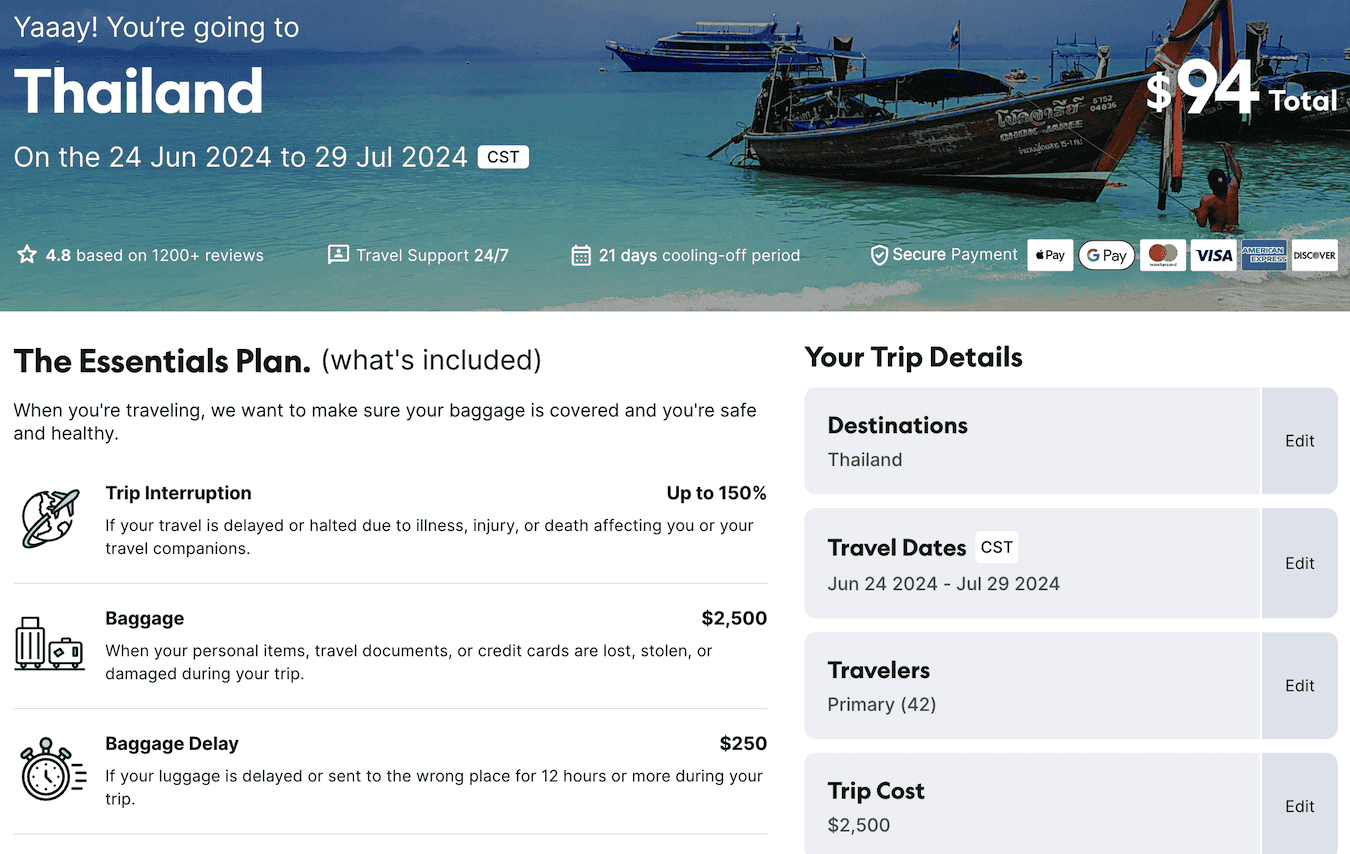
Freely policies have a pretty wide range of coverage. Currently, plans include coverage for the following:
Emergency Medical Expenses
This is the most important component of any insurance plan. It’s what will come into play if you fall down some stairs and break a leg or are hospitalized because you get hit by a car, get sick, etc. In short, if you’re sent to a hospital or doctor, this is what offers you emergency medical coverage.
I always recommend travelers have at least $100,000 USD in coverage because hospital bills add up fast. Freely offers $500,000 USD in coverage on the base plan. That’s a high limit and can cover you for everything the road throws your way.
Emergency Evacuation and Repatriation
Medical and emergency evacuations can be incredibly expensive. These might be required if you get injured while hiking and need to be airlifted to the hospital, or if you have to be repatriated to your home country.
Incidents like these can cost upwards of $250,000 USD, which is enough to bankrupt most travelers. Fortunately, Freely’s base policy covers up to $1,000,000 USD for emergency evacuations. That’s more than a lot of other insurance companies offer should you need an emergency evacuation.
Emergency Dental Expense
I always appreciate travel insurance policies that cover emergency dental care. Freely offers $1,000 USD for emergency coverage on its base plan. This doesn’t mean you can go get a dental check-up if you have a cavity or want a cleaning, but rather that you’ll be able to see a dentist should you experience an unforeseen emergency or sudden pain while on your trip.
Accidental Death and Dismemberment
Nobody wants to think about the worst-case scenario of dying on the road (I sure don’t) but knowing that your insurance policy can cover these eventualities offers a lot of peace of mind. For example, the policy pays $50,000 USD for accidental death, which (not to get too morbid) will likely be helpful to your loved ones should the worst occur.
Trip Interruption
When you miss part of your trip or have to return home early due to eligible unforeseen circumstances (such as illness or injury), Freely will reimburse you up to 150% of the cost of the trip. Considering how often flights are delayed and how often a natural disaster occurs, this is a solid addition and something not a lot of affordable plans include.
Lost, Stolen, or Damaged Baggage
Freely’s coverage for lost or stolen baggage is similar to other companies, in that there’s a per-item limit of $500 USD and a total cap of $2,500 USD. While that’s good for a lot of gear, such as a basic digital camera or sporting equipment, it may not cover the entire price of a laptop or more heavy-duty camera.
However, as I mentioned above, you can buy an add-on for additional coverage. This will bump your baggage per-item limit to $1,500 USD and the total limit to $5,000 USD. Your electronic and professional equipment coverage is $2,000 USD, which provides substantial coverage for your phone or laptop.
While the cost for this upgrade will vary, using the example below (a month long trip to Thailand), it would cost around $23 USD for the add-on. That’s super affordable.
Baggage Delay
This is a nice perk for anyone who isn’t traveling carry-on only. Essentially, if your luggage is delayed 12 hours or more, you’ll qualify for up to $250 USD so you can buy necessary clothing and personal items (within a reasonable limit). With Baggage Upgrade this benefit can be increased by $100 USD.
Note: As with any insurance plan, you’ll want to read the fine print of your policy for more information. Additionally, details might be different based on where you live, so always double-check while researching just to be safe.
What’s NOT Covered?
Freely is primarily geared toward covering medical emergencies and basic travel mishaps (like delays and lost luggage). It’s good practice to tell you what’s not covered, such as the following:
- Alcohol- or drug-related incidents
- Any electronics over $500 USD (without an add-on)
- Certain high-risk activities (e.g., driving in a motor vehicle competition)
- Participation in professional or amateur athletics competitions
- Losses incurred because of a pre-existing medical condition.
If you’re not sure if the activity you want to do is covered, or if you want more information about what is not covered, reach out to Freely directly.
Currently, Freely’s policies are available only to residents of the US and Australia. Coverage described in this article is specific to the US product.
How Much Does Freely Cost?
You can get a quote online at freely.me in less than one minute. You just need to input basic information, like where you live, where you’re going, how long you’re traveling for, and how much your trip costs.
For example, someone aged 30 going from the US to Thailand for one month will pay around $40 USD for base coverage. That is for a trip costing around $2,000 USD and not including any extras or Daily Boosts.
Click here to get a quote from Freely.
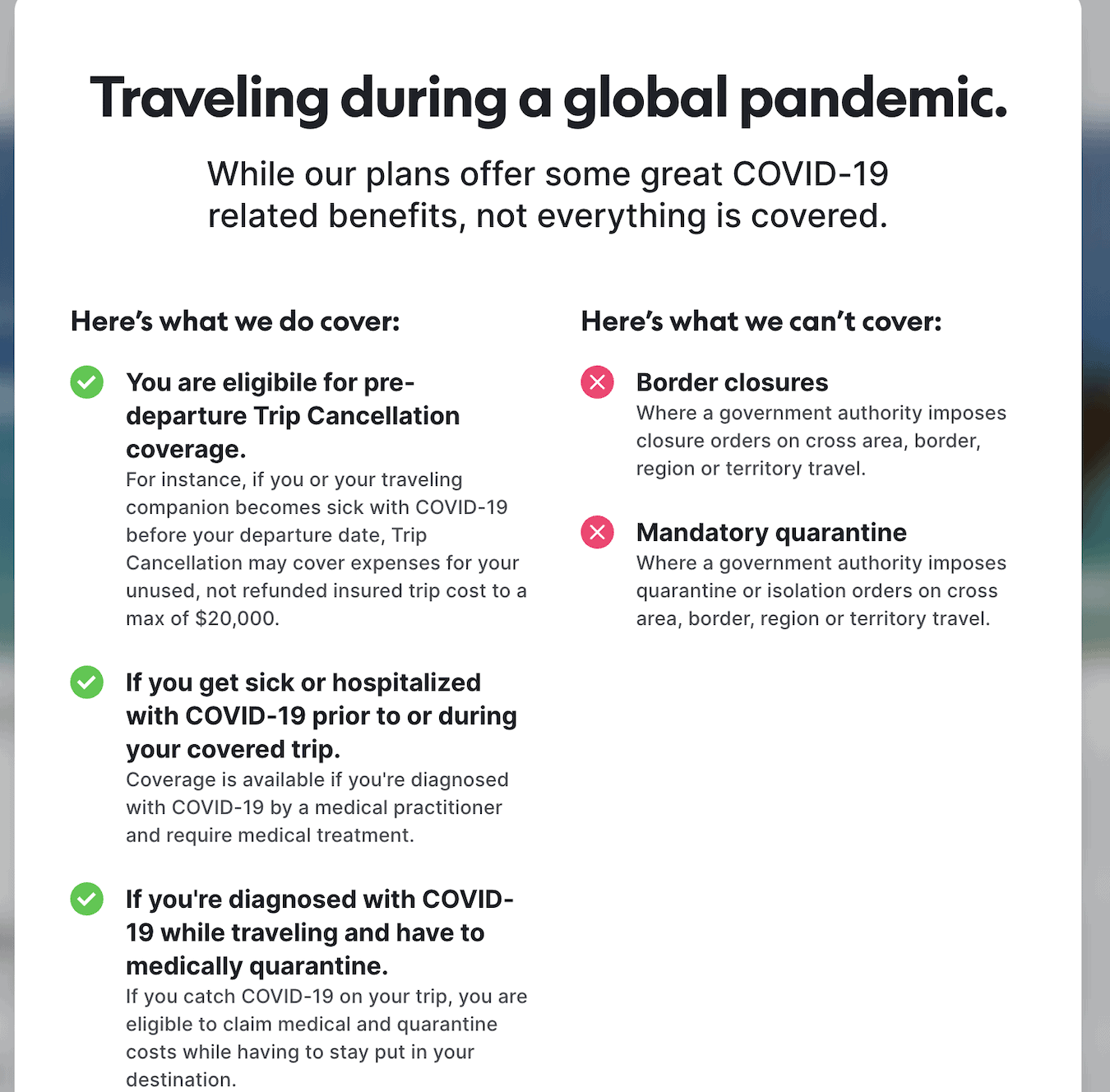
One thing I like about Freely when it comes to getting quotes is that they tell you what isn’t covered. A lot of companies just imply that (i.e., if it’s not mentioned, it’s not covered).
Freely, on the other hand, explicitly adds reminders of what is not covered when you’re looking for a policy, so as to ensure that your expectations are accurate.
Pros of Freely
- 24/7 emergency assistance
- Emergency medical coverage
- Emergency Evacuation and trip interruption coverage
- Coverage for lost, stolen, or damaged baggage
- COVID coverage
- Daily add-ons available for extra gear and activities
Cons of Freely
- Only available in the US and Australia
- Downloading the app is required
Who is Freely For — and NOT For?
Freely is very affordable, making it a solid choice for backpackers and budget travelers. Long-term travelers who are more flexible with their plans will also appreciate being able to update their policy right in the app.
It’s also a great choice for adventurous travelers since you can add Daily Boosts for things like skydiving, scuba diving, etc.
Freely’s app also sends out safety alerts and COVID updates, making it a good option for those concerned about safety issues. Because Freely relies on an app, they’re able to pinpoint your location to ensure important local safety updates get to you. I can’t think of another insurance company that offers that kind of service, ensuring your peace of mind no matter where you’re going.
On the flip side, Freely may be frustrating for anyone who doesn’t want to download and use an app. Most of Freely’s services (making a claim, changing or updating your policy) are only available in the app. While this makes it streamlined and convenient in some ways, those who want to be able to access and manage their account on a computer might want to choose a different company.
I think buying travel insurance should be a simple and straightforward process. Finding a policy shouldn’t be totally mind-numbing or time-consuming. And while Freely is still quite new on the market, it has a lot of potential. Its app makes finding the information you need a breeze, and the extras and Daily Boosts add customization I hope more companies embrace. I think it’s a worthwhile company to check out when you’re shopping around for a plan.
Click here to learn more and get a quote today!
Book Your Trip: Logistical Tips and Tricks
Book Your Flight
Use Skyscanner to find a cheap flight. They are my favorite search engine because they search websites and airlines around the globe so you always know no stone is left unturned.
Book Your Accommodation
You can book your hostel with Hostelworld as they have the biggest inventory and best deals. If you want to stay somewhere other than a hostel, use Booking.com as they consistently return the cheapest rates for guesthouses and cheap hotels.
Looking for the Best Companies to Save Money With?
Check out my resource page for the best companies to use when you travel. I list all the ones I use to save money when I’m on the road. They will save you money when you travel too.
Want to Travel for Free?
Travel credit cards allow you to earn points that can be redeemed for free flights and accommodation — all without any extra spending. Check out my guide to picking the right card and my current favorites to get started and see the latest best deals.
Need Help Finding Activities for Your Trip?
Get Your Guide is a huge online marketplace where you can find cool walking tours, fun excursions, skip-the-line tickets, private guides, and more.
The post Freely Travel Insurance Review appeared first on Nomadic Matt's Travel Site.
]]>The post The Best eSIM for Traveling Europe appeared first on Nomadic Matt's Travel Site.
]]>
If I had to confine my travels to one region of the world for the rest of my life, it would probably be Europe. From the iconic views of Paris to the amazing cuisine of Italy to the lively nightlife of places like Barcelona and Budapest, Europe has it all. It’s a region you can explore on a budget or a place to splash out on luxury hotels and charming river cruises. It’s perfect for weekend getaways or month-long adventures.
I’ve been visiting Europe for over 15 years. And while each trip is different, there’s one thing I always do when I go: I buy an eSIM.
SIM cards are what allow you to make calls and access mobile data from your smartphone. In the past, this meant buying and installing physical SIM cards and swapping them in and out from country to country. While this was cheaper than paying roaming charges from my provider back home, it was a hassle.
Fortunately, there is an easier (and cheaper) way to access mobile data in Europe during your next trip: an eSIM.
eSIMs are virtual SIM cards that provide mobile data without the need to buy a physical SIM card. They’re easy to install, affordable, and work just as well as regular SIM cards.
And the best eSIM for travelers in Europe? Holafly.
What is Holafly?
Holafly provides international eSIMs to travelers so they can stay connected as they explore the world. They provide coverage in over 170 countries, including all around Europe. Instead of buying a physical SIM card when you visit a destination, with Holafly, you can use a digital SIM card instead.
To get an eSIM, you’ll first want to browse their plans to see which duration is best for you. They have plans from 5-90 days, costing 19-99 EUR. All of their plans have unlimited data (which is a must in my opinion).
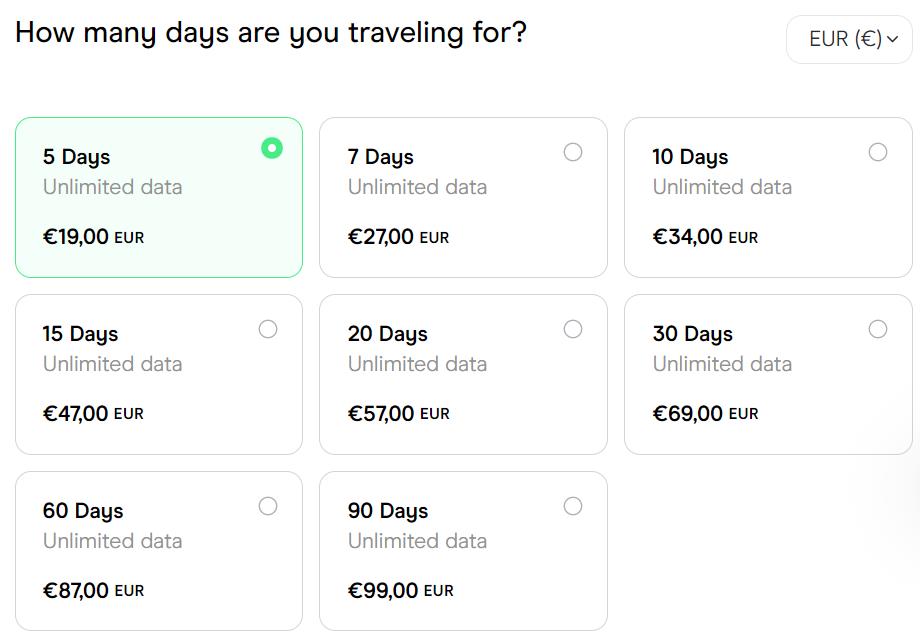
Once you choose your plan, you can make a purchase, either via their website or via their app. Here’s a quick look at the steps involved:
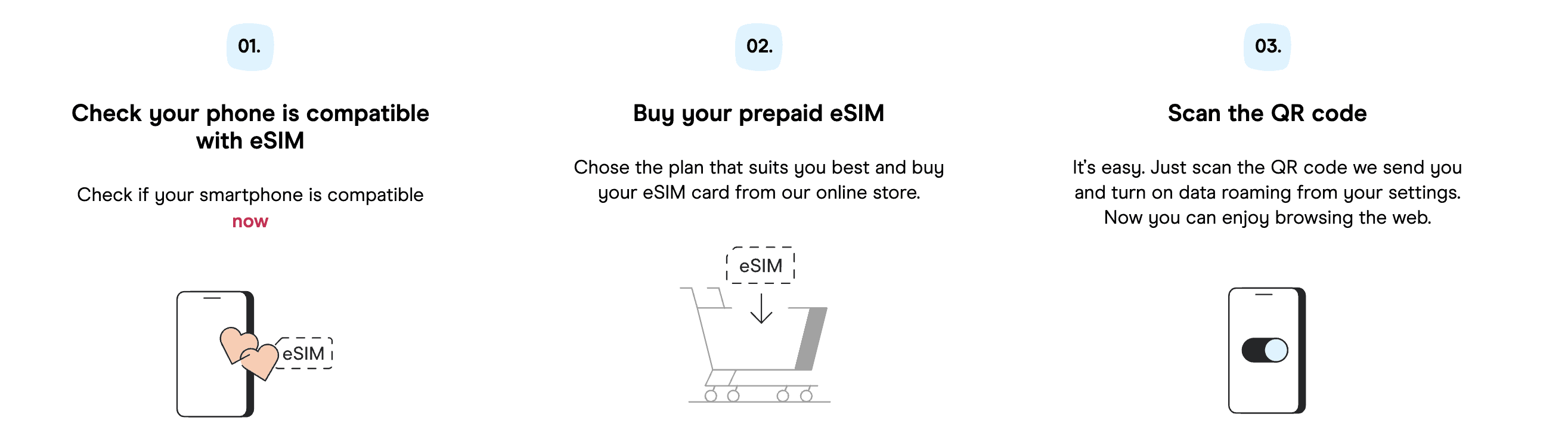
From here, you’ll get additional instructions emailed to you that walk you through the process of setting it up. Set up is via QR code or manually, and if you’re on iOS 17.4, there’s also an option to enable automatic installation and activation with just one tap. All options are super straightforward, but if you run into trouble they have 24/7 support to help you with any issues.
With a Holafly eSIM for Europe, you’ll enjoy unlimited data and even keep your Whatsapp number (which you should download if you don’t use it already, as everyone in Europe uses it, including businesses).
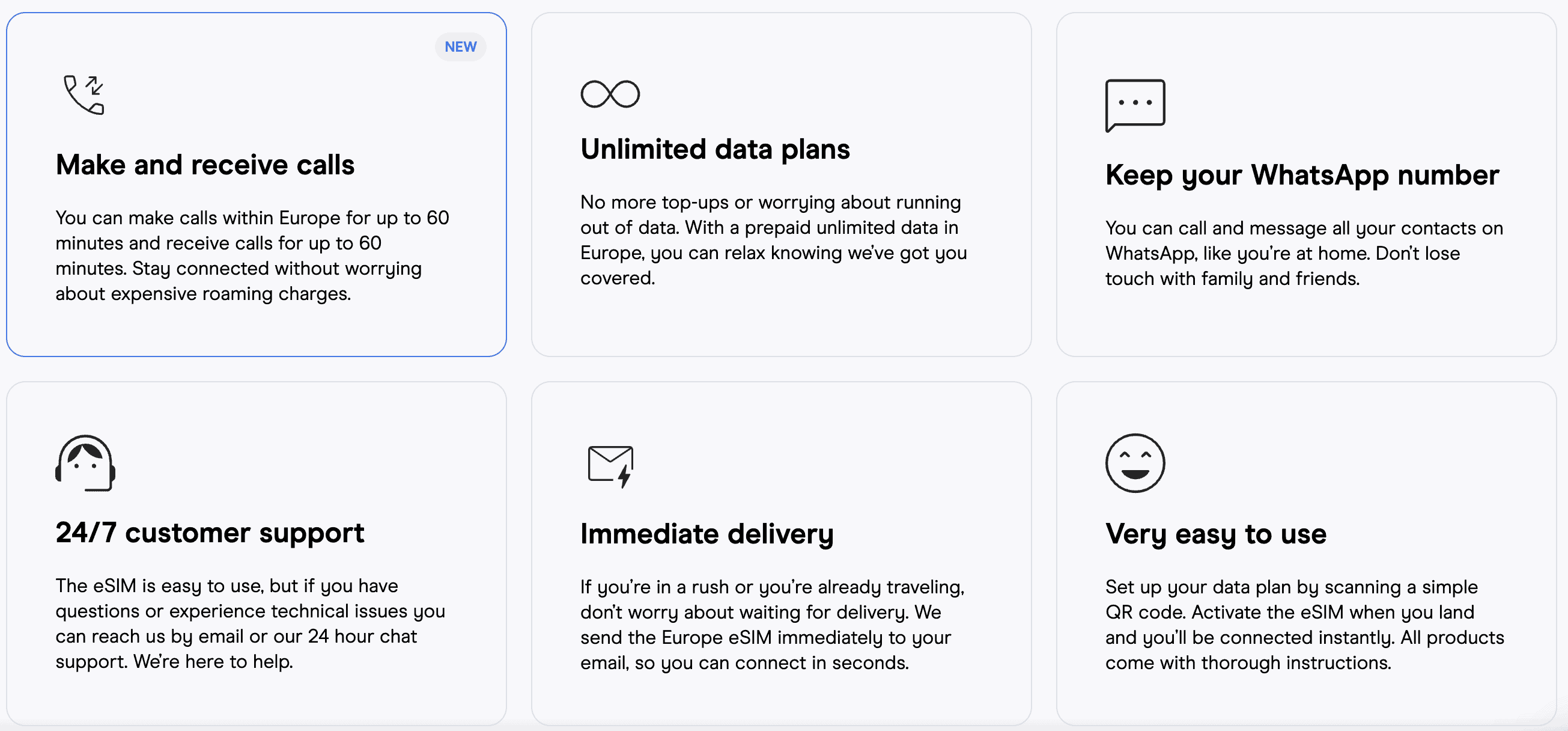
If you’re heading to multiple countries in Europe, having a single eSIM will save you a ton of hassle over buying new physical SIM cards while you travel. And since you can top up your eSIM online, you’ll save a bunch of time too since you never need to find a store to visit to get a SIM or load more data.
(As I mentioned above, Holafly has unlimited data plans for Europe in case you’re worried about data limits.)
Why Use Holafly in Europe?
While there is plenty of free Wi-Fi around Europe, it’s not available everywhere. And since connections can be slow (or unsafe), having your own mobile data is always recommended. I always make sure I have my own data when I travel around Europe because it’s just so helpful when it comes to booking activities, getting a taxi or Uber, and looking up things like directions of translations.
Holafly is available in 32 countries in Europe, providing fast and stable connections everywhere you go. They’re much, much cheaper than roaming charges, and if you’re visiting multiple countries, having an eSIM is far less of a hassle than trying to buy new physical SIM cards in each new country you visit.
In short, if you’re heading to Europe and want to stay connected, a Holafly eSIM is a must.
Here’s a look at what’s included at a glance:
- Unlimited data
- Plans starting at $19 USD
- Available in 32 countries in Europe
- Easy installation process (automatic on iOS 17.4)
- 24/7 customer support
For me, the unlimited data is the big highlight here. That means you’ll never run out of mobile data for things like Google Maps, Google translate, or looking up things to do.
And since you’ll be keeping your physical SIM card in your phone, you can still take calls to your regular phone number if you need to.
The only downside is that there is no data sharing on their Europe plans (i.e. hot spotting), but with plans so cheap you likely won’t need to share with a friend or family because they can just purchase their own eSIM.
Europe is an amazing region to explore. I never get tired of wandering the continent and always encourage people to visit. Regardless of your interests or budget, there is something here for you. And with a Holafly eSIM you’ll be able to make the most of your trip, save money, and stay safe as you enjoy everything the continent has to offer!
You can download the Holafly app in the App Store or Play store.
Book Your Trip to Europe: Logistical Tips and Tricks
Book Your Flight
Use Skyscanner to find a cheap flight. They are my favorite search engine because they search websites and airlines around the globe so you always know no stone is left unturned!
Book Your Accommodation
You can book your hostel with Hostelworld as they have the biggest inventory and best deals. If you want to stay somewhere other than a hostel, use Booking.com as they consistently return the cheapest rates for guesthouses and cheap hotels.
For suggestions on where to stay during your trip, here are my favorite hostels in Europe!
Don’t Forget Travel Insurance
Travel insurance will protect you against illness, injury, theft, and cancellations. It’s comprehensive protection in case anything goes wrong. I never go on a trip without it as I’ve had to use it many times in the past. My favorite companies that offer the best service and value are:
- Safety Wing (best for everyone)
- Insure My Trip (for those over 70)
- Medjet (for additional evacuation coverage)
Looking for the Best Companies to Save Money With?
Check out my resource page for the best companies to use when you travel. I list all the ones I use to save money when I’m on the road. They will save you money when you travel too.
Want More Information on Europe?
Be sure to visit my robust destination guide to Europe for even more planning tips!
The post The Best eSIM for Traveling Europe appeared first on Nomadic Matt's Travel Site.
]]>The post The Best eSIM on the Market: How to Get Unlimited Data for Your Trip appeared first on Nomadic Matt's Travel Site.
]]>
When I started backpacking around the world, there were no smartphones. If you needed to call home, you had to find a pay phone and if you needed to use a computer to look something up or send an email, you had to find an internet café.
But times have changed.
These days, travelers rely on their phones to find cheap flights, book accommodation, look up things to see and do, translate menus, get directions, and much more.
And while I think a lot of travelers maybe spend too much time on their phone, phones are a vital part of the savvy traveler’s arsenal.
That means travelers need reliable mobile data so they can find the information they need and keep in touch with friends and family back home.
For travelers around the world, the best way to ensure you have access to the internet and are able to stay connected is with an eSIM.
While it’s definitely possible to buy a SIM card on arrival to your destination, eSIMs are super easy to use and allow you to get prepared in advance so that you have mobile data the moment you land. They’re also cheaper and come with better support.
And if you’re visiting multiple countries, buying (and keeping track of) multiple SIM cards can be a hassle.
In this post, I’ll go over what exactly an eSIM is and how you can get one for your next trip so you can save money and stay connected during your next trip.
What is an eSIM?
A SIM card is a small memory card that you insert into your smartphone in order to make calls and use the mobile data. It has unique identifiers that ensure that when people call you, the call comes to your device. You generally get one from your phone provider when you sign your contract.
An eSIM is a digital version of this. Instead of a physical memory card, you’ll install software on your smartphone that replicates the same functions as the physical card.
Most smartphones only have a single port for a SIM card so the benefit of eSIMs is that you can have multiple eSIMs on a single device.
For example, if you’re from Australia and are visiting the United States, you’ll need to physically remove your Australian SIM card on arrival and install a US SIM card if you want to avoid paying excessive roaming fees. But once you swap SIM cards, you won’t be able to receive calls or texts to your Australian phone number unless you physically remove the US SIM card and put the Australian SIM card back into your phone.
This is a tedious process if you need to access multiple numbers during your trip. Hence the convenience of eSIMs. They make it super easy to visit multiple countries each year without having to juggle SIM cards. And since they let you get set up before you arrive, they provide more peace of mind.
The Best eSIM for Travelers
The best eSIM on the market is Holafly. They have a ton of plans with unlimited data and they’re connected to the best networks so you’re covered no matter where you travel. They current offer plans to 160 destinations, including plans with unlimited data in Europe, the United States, Mexico, China, Turkey, and Japan.
Holafly’s eSIMs are super easy to install and Holafly offers 24/7 support so if you have an issue getting setup (or during your trip) you can reach out to them directly. Plus, if you’re on iOS 17.4, there’s a handy automatic installation feature that streamlines the process even more.
Here’s a quick overview of the Holafly eSIM:
PROS
- Plans from 5-90 days
- Unlimited data starting at $19 USD
- Easy installation process (automatic on iOS 17.4)
- 24/7 customer support
- Digital SIM so your current physical SIM will still work
- Doesn’t impact your WhatsApp number
CONS
- No data sharing in some destinations so you can’t hotspot
- Local phone number/SMS is available in only a few countries (most eSIMs are data only)
With Holafly, hotspotting is available in North America, but not others. While not being able to hotspot might be an issue for digital nomads, it’s likely not an issue for most travelers. And while there are a few countries (such as France and Austria) in which you get a local number to make/receive local calls, for the most part Holafly eSIMS just provide data. You’ll still be able to take calls over Facebook, Skype, WhatsApp, and other online platforms though.
Overall, the pros vastly outweigh the cons, making Holafly the best choice for eSIMs no matter where you travel.
How to Install a Holafly eSIM
To buy and setup your eSIM, simply visit holafly.com or download Holafly’s app (via the App Store or Play store). Once you’re there, you just need to follow these super simple steps:
Once you order your eSIM you’ll get instructions sent to you with more details:
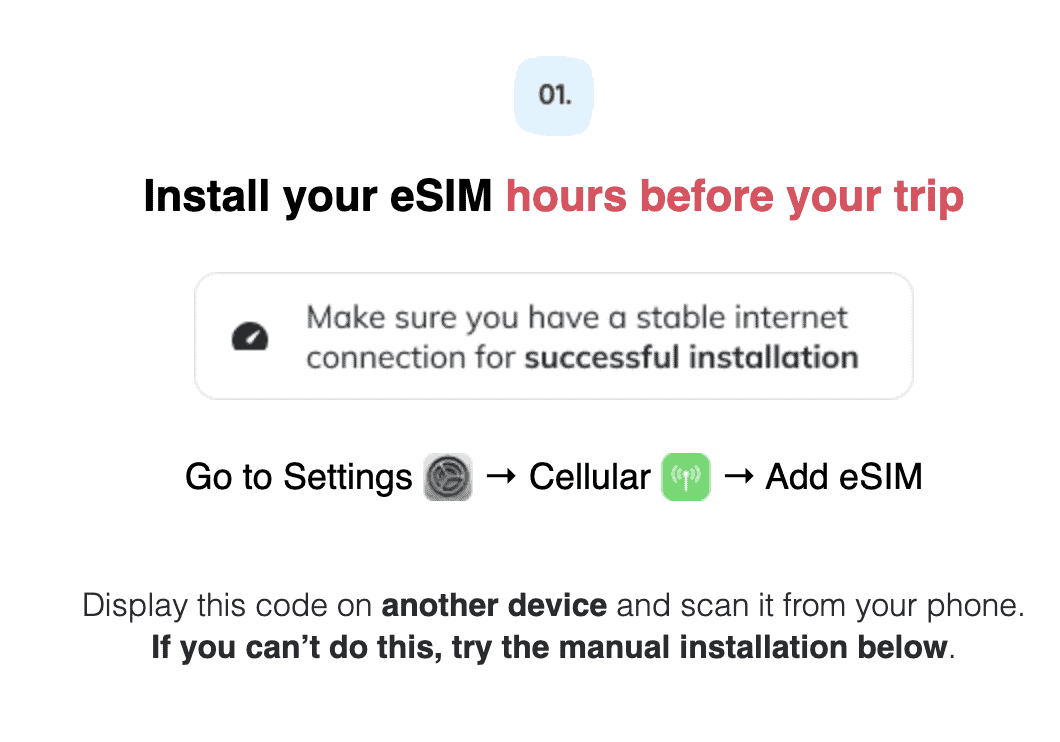
While you can download your eSIM on arrival, it’s best to get everything set up in advance. Install your eSIM once you get it so that everything is ready. That way, if there’s an issue you can talk to support before you depart.
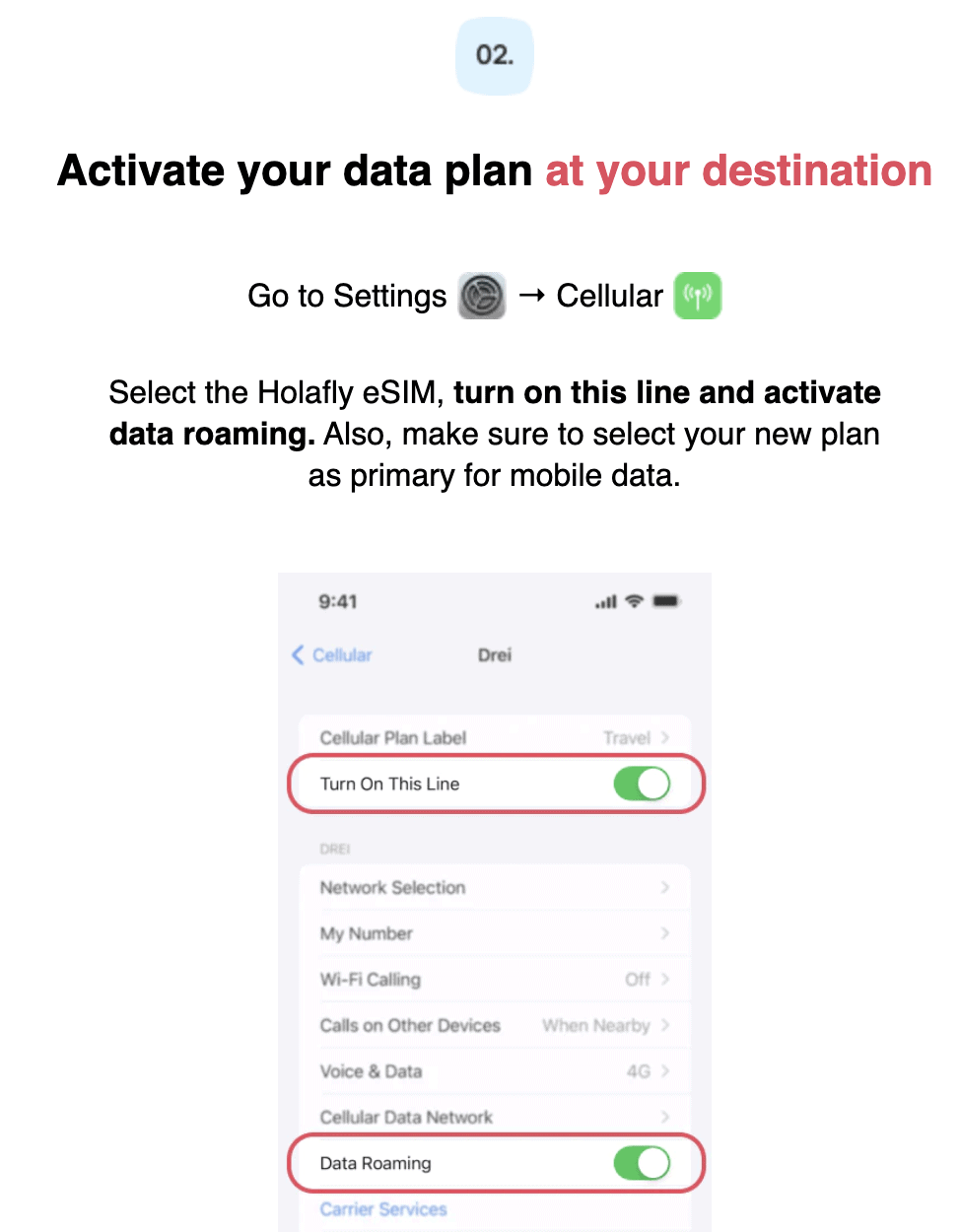
While it may seem complicated, activating an eSIM only takes a couple minutes. And again, iOS 17.4 users can take advantage of the new automatic installation process (you can still choose manual or QR code installation if you prefer). Since Holafly has 24/7 customer support, if you need assistance they can walk you through it.
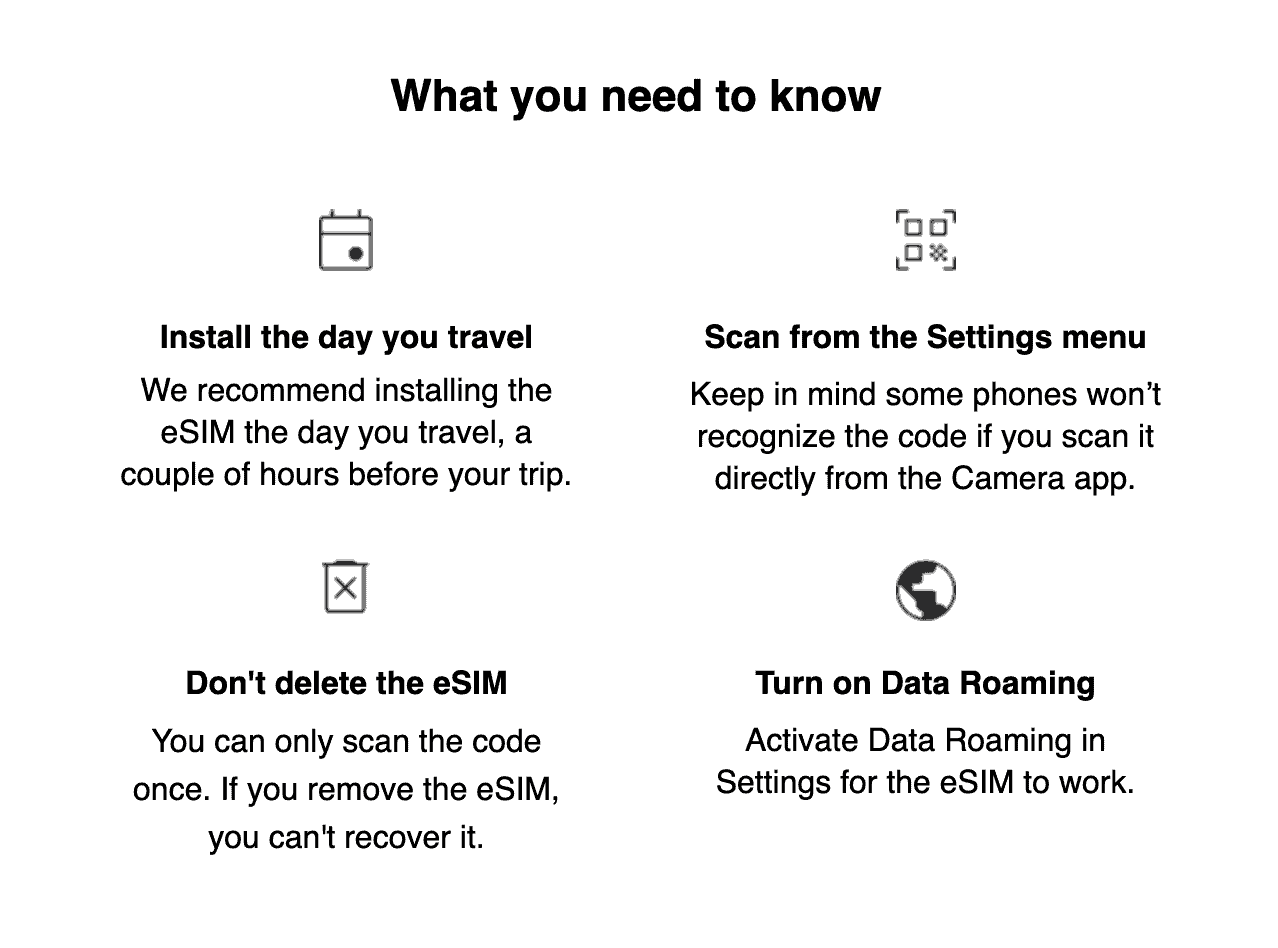
Again, while you could do all of this on arrival, it’s best to prepare your eSIM in advance. That way you’ll have access to it when you land so that you can look up transportation, call an Uber, contact your accommodation, or do whatever else you need to do on arrival.
It’s never been easier to stay connected during your travels. No matter where you’re going in the world, having access to mobile data is a must. By getting a Holafly eSIM for your next trip, you’ll be able to stay connected, stay safe, and ensure you make the most of your time in this massive, diverse country!
Book Your Trip: Logistical Tips and Tricks
Book Your Flight
Find a cheap flight by using Skyscanner. It’s my favorite search engine because it searches websites and airlines around the globe so you always know no stone is being left unturned.
Book Your Accommodation
You can book your hostel with Hostelworld. If you want to stay somewhere other than a hostel, use Booking.com as it consistently returns the cheapest rates for guesthouses and hotels.
Don’t Forget Travel Insurance
Travel insurance will protect you against illness, injury, theft, and cancellations. It’s comprehensive protection in case anything goes wrong. I never go on a trip without it as I’ve had to use it many times in the past. My favorite companies that offer the best service and value are:
- SafetyWing (best for budget travelers)
- World Nomads (best for mid-range travelers)
- InsureMyTrip (for those 70 and over)
- Medjet (for additional evacuation coverage)
Want to Travel for Free?
Travel credit cards allow you to earn points that can be redeemed for free flights and accommodation — all without any extra spending. Check out my guide to picking the right card and my current favorites to get started and see the latest best deals.
Need a Rental Car?
Discover Cars is a budget-friendly international car rental website. No matter where you’re headed, they’ll be able to find the best — and cheapest — rental for your trip!
Need Help Finding Activities for Your Trip?
Get Your Guide is a huge online marketplace where you can find cool walking tours, fun excursions, skip-the-line tickets, private guides, and more.
Ready to Book Your Trip?
Check out my resource page for the best companies to use when you travel. I list all the ones I use when I travel. They are the best in class and you can’t go wrong using them on your trip.
The post The Best eSIM on the Market: How to Get Unlimited Data for Your Trip appeared first on Nomadic Matt's Travel Site.
]]>The post 10 Travel Safety Tips to Help You Stay Safe Abroad appeared first on Nomadic Matt's Travel Site.
]]>
Staying safe on the road is a top concern for….well, everyone. No one wants to get scammed, hurt, or sick on the road. No one wants to get robbed.
And, when you are going somewhere you have never been before, it’s normal be cautious. You don’t know what to expect or how to play it safe. There’s a lot of unknowns.
While every country in the world is different, there’s some standard practices and common rules you can use to stay safe when you travel. Some of these rules are common sense, some were sadly learned from first hand experience!
Here are my 10 safety tips to ensure everything goes smoothly when you travel:
1. Learn about common scams
While scams are rare, they are out there, waiting for unwitting travelers to stumble into them. Most will only cost you a few bucks and a bit of embarrassment, but others can fleece you. Be sure to read up on your destination to see if there are any common scams to be aware of.
On my first trip to Thailand I was scammed multiple times on my first day. It was just a few bucks, fortunately, but it was still awkward and unpleasant. Since that trip, I’ve always made sure to be vigilant and research scams before I travel.
Common travel scams include taxis not using their meter because it’s “broken,” people trying to rope you into signing a petition (and then demanding a donation), or people selling fake (or overpriced) tickets to attractions.
Review this list of common scams before you go so that you’re ready for whatever is thrown your way.
2. Buy travel insurance
One of the very first things I do once I book a trip is buy travel insurance. I know, it’s not a fun part of travel planning and it’s a boring thing to read (and write) about. But buying insurance early guarantees I’m covered in case I need to cancel my trip, if my flight is canceled or delayed, and much more.
For just over a dollar per day you get peace of mind, knowing that, should something go wrong, you won’t have to deal with it (or pay for it) alone.
I never leave home without travel insurance. You shouldn’t either.
If you’re on a budget, SafetyWing is my go-to company for affordable plans.
If you’re really concerned and want someone to call in an emergency, check out Medjet.
Medjet has a security response membership, MedjetHorizon, with 24/7 security teams ready to help (and extract you if necessary). It can also get you moved home if you’re hospitalized. Most travel insurance plans just move you to the nearest hospital, but Medjet will get you to your preferred facility in your home country, no questions asked.
If you want to learn more, you can read my complete review of Medjet here.
You can get a Medjet quote here (there are super affordable short-term and annual memberships).
For more information on travel insurance, here’s a list of all my recommended travel insurance companies.
3. Know what your insurance will and will not do
Before you leave home, read over your insurance policy again. Every company is different, so it’s good to know exactly what is and is not covered.
For example, many travelers think that if they break their leg abroad, their insurance company’s medical evacuation benefits will get them home. That’s not always the case. Chances are, they will only get you to the “nearest acceptable facility” and make sure that you’re treated there. You’ll then be on your own to get home.
For security threats and natural disasters, insurance companies generally require what’s called a “hard trigger” before they can or will assist you. That means the government must declare an emergency or evacuation order. If that doesn’t happen, you will be expected to get home yourself, even if the situation is dire (and even if it costs thousands of dollars).
That’s why I always suggest Medjet to travelers who want to be sure they get home no matter what. It’s the ultimate in security and crisis response. There’s a 24/7 crisis line that can respond to a wider range of safety threats without the need for a hard trigger.
4. Save your emergency contacts
Once you have travel insurance, save the contact number in your phone. Save the emergency contact email in your inbox too. That way, you can find it quickly if you have a question or need assistance.
If you think you might not have Wi-Fi or cell phone service during your trip, write the number down in your phone on a notes app just to be safe. You might also want to keep a physical copy of both in your wallet too, just in case something happens to your phone.
Be sure to also email yourself copies of all your important documents, such as your passport and license, in case you lose your wallet. Having printed copies of them isn’t a bad idea either.
5. Prepare a Google Map
Once you’ve booked your accommodation, save it on Google Maps. That way, you can find your accommodation should you get lost and need to show the address to a driver. You might want to also take a physical business card from your accommodation once you arrive (it will have the address and contact info on it, which might come in handy).
Additionally, save other important destinations on your Google Map, such as the nearest hospital, pharmacy, grocery store, and embassy/consulate. If you feel comfortable doing so with a trusted person at home, you can also share your location through Google Maps. For many people, especially solo travelers, this provides peace of mind, knowing that someone in the world knows their whereabouts.
6. Download the Safe Traveler App
Once you’ve decided where to go (and if you’re from the US), sign up for the S.T.E.P. program. It alerts local embassies that you’re in the area in case a situation arises. Next, download the State Department’s Safe Traveler app. You just punch in the destinations you want to visit, and it will send push alerts to your smartphone regarding any important security concerns. That way, you’ll be forewarned should anything happen that you should be aware of.
7. Follow embassies on Twitter
If you use Twitter, follow your country’s embassy in the destination country. It will not only mention important local events and holidays but, should a situation arise, also publish updates and information there. Make sure you turn your notifications on so you don’t miss anything important.
Following local news companies on twitter is also a good idea, especially if there is a local english-speaking website that has a Twitter account. That way, you definitely won’t miss any important happenings.
8. Separate your cash and cards
When traveling, don’t keep all your cash and cards in one place. Keep some in your wallet, some in your day bag, and some in your accommodation. That way, if you lose your wallet or if your bag is stolen you still have cash and cards to fall back on.
It’s not uncommon for banks to cancel or put a hold on a credit card while you’re abroad either, so bring more than one just to be safe.
9. Ask locals for advice
When you check into a hotel or Airbnb, ask if they have any safety advice to share. Are there neighborhoods worth avoiding? Are there any scams they think you might encounter? Maybe some areas are safe during the day but not at night. Ask for input from locals; they’re in the best position to help.
That said, it never hurts to get a second opinion. Some locals might consider an area unsafe, while others don’t. Be sure to shop around for advice so you can avoid any biases. Travel is subjective, after all, so the more opinions you can get, the better.
10. Don’t share too much information
If you’re posting on social media, don’t post in real time. Wait a couple hours and then post. That way, would-be criminals can’t use that information to get your location and rob you or stalk you (this is especially important for solo female travelers).
Moreover, don’t give away too much info to random strangers. Avoid sharing your hotel name, and, if possible, avoiding telling people it’s your first time visiting the city/country as they may use that as an invitation to try and rip you off.
It may seem like the world is a dangerous place, with trouble lurking around every corner, but that’s only because fear sells. I’ve been traveling for over 15 years, and 99% of the time, things go smoothly.
But for the remaining 1% of experiences, it’s best to be prepared. By arming yourself with knowledge before you go and ensuring you have comprehensive insurance and safety coverage, you’ll be able to travel with confidence, knowing that you’re ready for whatever the road throws your way.
Book Your Trip: Logistical Tips and Tricks
Book Your Flight
Find a cheap flight by using Skyscanner. It’s my favorite search engine because it searches websites and airlines around the globe so you always know no stone is being left unturned.
Book Your Accommodation
You can book your hostel with Hostelworld. If you want to stay somewhere other than a hostel, use Booking.com as it consistently returns the cheapest rates for guesthouses and hotels.
Don’t Forget Travel Insurance
Travel insurance will protect you against illness, injury, theft, and cancellations. It’s comprehensive protection in case anything goes wrong. I never go on a trip without it as I’ve had to use it many times in the past. My favorite companies that offer the best service and value are:
- SafetyWing (best for budget travelers)
- World Nomads (best for mid-range travelers)
- InsureMyTrip (for those 70 and over)
- Medjet (for additional evacuation coverage)
Want to Travel for Free?
Travel credit cards allow you to earn points that can be redeemed for free flights and accommodation — all without any extra spending. Check out my guide to picking the right card and my current favorites to get started and see the latest best deals.
Need a Rental Car?
Discover Cars is a budget-friendly international car rental website. No matter where you’re headed, they’ll be able to find the best — and cheapest — rental for your trip!
Need Help Finding Activities for Your Trip?
Get Your Guide is a huge online marketplace where you can find cool walking tours, fun excursions, skip-the-line tickets, private guides, and more.
Ready to Book Your Trip?
Check out my resource page for the best companies to use when you travel. I list all the ones I use when I travel. They are the best in class and you can’t go wrong using them on your trip.
The post 10 Travel Safety Tips to Help You Stay Safe Abroad appeared first on Nomadic Matt's Travel Site.
]]>The post Work from Home Gift Guide: 18 Amazing Gifts for Remote Workers appeared first on Nomadic Matt's Travel Site.
]]>
The pandemic has made working from home a permanent fixture of our lives. What once just techies and bloggers did, now accountants and all kinds of office workers do.
Not only is it cheaper for businesses but it means more flexibility, time with family, and less commuting. I think a lot of companies are realizing they don’t need huge corporate offices to have successful employees.
As the pandemic has subsided, many companies have returned to a hybrid model, with some all-hands meetings and some rented space for those who want to go into an office, but for everyone else, the future of work looks increasingly remote.
While I love working from home, it does have its challenges. Being productive and finding that elusive work-life balance can be tricky. It’s a constant battle — but one that can easily be accomplished with a few helpful gadgets.
To help my fellow remote workers stay on task, I’ve created this work-from-home gift guide for you or the remote worker in your life.
1. Ergonomic Office Chair
 Everyone who works online or in an office knows that back pain and bad posture are constant threats — spending hours at a computer takes its toll on your back. I know, lumbar support isn’t sexy, but invest in a good ergonomic desk chair with lower back support, a padded seat, and padded armrests. You’ll thank me later!
2. Standing Desk
 Like your office chair, a solid desk will go a long way in making your work more enjoyable and physically comfortable. A standing desk gives you the option to sit or stand, allowing you to take some of the pressure off your back throughout the day. While they aren’t cheap, they are a worthwhile investment for anyone who plans on working from home and needs a dedicated, flexible workspace.
3. Standing Mat
 If you have a standing desk, make sure you get a padded mat to stand on as well. This will keep your feet from getting sore and help with your posture. A basic piece of carpet will help if you’re on a budget, though a proper padded mat will work wonders for your back and feet.
4. Laptop Stand
 Regardless of what kind of desk you’re working on, consider purchasing a laptop stand if you’re using a laptop every day for work. This will reduce neck pain and strain and help improve your posture, since you’ll be looking straight ahead instead of downward toward your laptop. They’re super affordable and make a huge difference in how your work impacts your body. I can’t recommend them enough!
5. External Keyboard & Mouse
 Working on a laptop keyboard and trackpad can lead to carpal tunnel syndrome. Not only that but it’s just not a comfortable setup for an optimized workflow. Instead, invest in a Bluetooth keyboard and wireless mouse. They will improve your workflow and keep your wrists and hands from getting repetitive strain injuries.
6. Noise-Canceling Headphones
 From screaming kids to barking dogs to traffic outside, there are a lot of distractions at home that can derail your productivity. To help you stay on track (and stay sane), invest in a good pair of headphones. Wireless Bose QuietComfort 35 headphones are widely popular from my go-to brand. They are comfortable and rechargeable, and do an amazing job at removing background noise. (If you’re on a budget, consider the QuietComfort 25 instead.)
7. Laptop Bed Tray
 Should you be working (or watching Netflix) in bed? Probably not. Will it happen anyway? Probably. Make life easy on yourself and purchase a basic laptop tray you can use when in bed or on the couch. While not 100% necessary, it’s one of those bonus items that just make life easier whenever you feel like using your laptop outside of your office.
8. External Monitor
 While we’re all used to the smaller screens of a laptop, sometimes having a larger screen can help — especially if you’re working on your computer day in and day out. An external monitor can hook up to your laptop and give you a larger screen to work with, helping both your vision and your posture in the process (it’s also much more enjoyable for watching Netflix). A 27″ monitor offers you twice as much space as your standard laptop without breaking the bank.
9. MacBook Pro
 If you need a new laptop to work from home, the new MacBook Pro is faster than ever. Apple’s new M2 chip has really kicked their laptops up a notch. While I like the MacBook Air better for travel (it’s lighter and does everything I need), the new Pro is also super light and powerful. It’s a reliable choice for anyone looking for a new laptop for the home office.
10. External Hard Drive
 Nothing is more devastating for those who work online than losing your data. While I also keep a digital backup of my files in the cloud, having a physical backup of your hard drive is a no-brainer. After all, you’re just one spilled cup of coffee away from losing everything! Buy an external hard drive and get into the habit of backing up your device every week. That way, if something happens to your laptop, you won’t have to start from scratch.
11. 3-in-1 Charging Station
 This charging station has room to charge a phone, AirPods, and a smartwatch all at the same time. If you’re a die-hard Apple fan and have all the accessories, this charging station is a must, lest you constantly struggle for space to charge your devices. If you don’t need a 3-in-1 charging station, this regular wireless phone charger will do the trick.
12. Ring Light
 If you’re going to be doing a lot of social media videos or Zoom calls, consider investing in a basic ring light. This will ensure that your videos and calls are properly lit, which goes a long way toward improving your video production quality (especially on social media). It’s one of those extra touches that people notice and that sets you apart from the competition.
13. VPN (Virtual Private Network)
 While many of us use VPNs (virtual private networks) to protect our data while we’re abroad, most of us don’t use them at home — even though we should. Keep your data safe and your browsing habits private by using a VPN. You wouldn’t leave your house or car unlocked all day, so why would you leave your digital doors open? Stay safe by using a VPN.
14. Meditation Mat & Cushion
 Make sure you step away from the laptop regularly to rest your brain and your body by purchasing a meditation cushion and mat. Just 10 minutes of sitting a day will work wonders for your state of mind, help you stay refreshed, and lower your stress. Keep them beside your desk so you’re more inclined to use them regularly. Also, download a free meditation timer like Enso, so you can time your meditation breaks.
15. Yoga Mat
 Another helpful tool for stepping away from the laptop and getting your blood flowing is a yoga mat. There are tons of free yoga videos on YouTube for both short and long sessions, making this an easy and affordable way to add more movement into your day. Whether you want to build muscle, burn fat, reduce stress, or improve your flexibility, there’s a free yoga or workout tutorial for you!
16. Art & Maps
 While I’m not much of an interior decorator, I do appreciate the effect art, photography, and (especially) maps have on an office space. Most photographers sell prints of their work, and you can find all kinds of cool custom maps and works of art on sites like Etsy. Spend some time browsing for pictures, art, and maps to brighten up your space. It will make all the difference.
Here are some suggested maps and prints to check out:
- Hand-drawn typographic maps from Legal Nomads (Use the code NOMADICMATT to save 10%)
- Travel prints from Erin Outdoors
- Scratch Map from Landmass
17. Reusable Water Bottle
 Since you can’t just drink endless amounts of coffee all day (or, in my case, tea), get a reusable water bottle to stay hydrated. Dehydration will make you groggy and tired, so treat yourself a LifeStraw. They have built-in filters to ensure your water is clean and safe.
18. Dry-Erase Wall Calendar
 For anyone looking to stay organized, a dry-erase calendar is a must. They’re perfect for keeping track of important meetings and appointments and give you a quick overview of your entire month at a glance. If you struggle with procrastination or time management, definitely add a calendar to your wish list.
Working from home is only going to grow in the years to come. These items will help you create a comfortable and functional workspace, build better habits, stay healthy, and ensure you’re always doing your best work.
Book Your Trip: Logistical Tips and Tricks
Book Your Flight
Find a cheap flight by using Skyscanner. It’s my favorite search engine because it searches websites and airlines around the globe so you always know no stone is being left unturned.
Book Your Accommodation
You can book your hostel with Hostelworld. If you want to stay somewhere other than a hostel, use Booking.com as it consistently returns the cheapest rates for guesthouses and hotels.
Don’t Forget Travel Insurance
Travel insurance will protect you against illness, injury, theft, and cancellations. It’s comprehensive protection in case anything goes wrong. I never go on a trip without it as I’ve had to use it many times in the past. My favorite companies that offer the best service and value are:
- SafetyWing (best for budget travelers)
- World Nomads (best for mid-range travelers)
- InsureMyTrip (for those 70 and over)
- Medjet (for additional evacuation coverage)
Want to Travel for Free?
Travel credit cards allow you to earn points that can be redeemed for free flights and accommodation — all without any extra spending. Check out my guide to picking the right card and my current favorites to get started and see the latest best deals.
Need a Rental Car?
Discover Cars is a budget-friendly international car rental website. No matter where you’re headed, they’ll be able to find the best — and cheapest — rental for your trip!
Need Help Finding Activities for Your Trip?
Get Your Guide is a huge online marketplace where you can find cool walking tours, fun excursions, skip-the-line tickets, private guides, and more.
Ready to Book Your Trip?
Check out my resource page for the best companies to use when you travel. I list all the ones I use when I travel. They are the best in class and you can’t go wrong using them on your trip.
The post Work from Home Gift Guide: 18 Amazing Gifts for Remote Workers appeared first on Nomadic Matt's Travel Site.
]]>